


Small business owners often overlook valuable tax deductions that could save thousands of dollars annually. The IRS allows dozens of legitimate write-offs that many entrepreneurs simply don’t know about.
We at Clear View Business Solutions see businesses miss out on significant savings every tax season. From office supplies to professional development, these small business tax deductions add up quickly when properly documented and claimed.
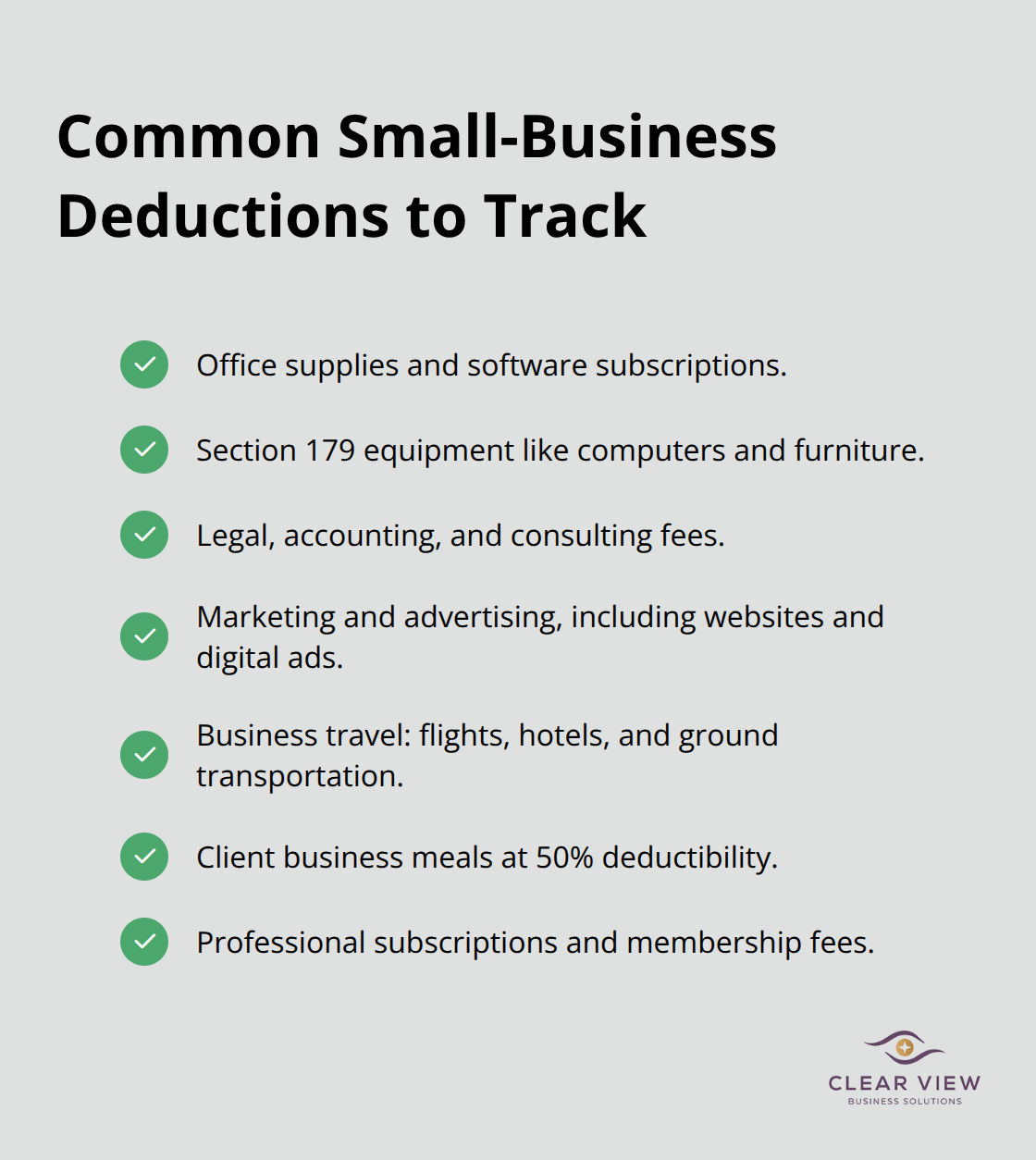
Office supplies form the foundation of legitimate business deductions, yet many small business owners underestimate their impact. Pens, paper, ink cartridges, and software subscriptions all qualify as ordinary and necessary expenses. The Section 179 deduction allows you to write off equipment purchases like computers, printers, and office furniture in the year of purchase rather than spread depreciation over time. For tax years beginning in 2024, the maximum section 179 expense deduction is $1,220,000. This immediate expense recognition can generate substantial tax savings for businesses that invest in technology upgrades or office equipment.
Legal fees, accounting services, and consultation costs represent some of the most overlooked deductions in small business tax plans. Tax preparation fees paid to professionals are fully deductible, which makes professional tax services essentially self-funded through reduced tax liability. Marketing and advertising expenses (including website development and digital campaigns) qualify for complete deduction and often generate measurable returns on investment.
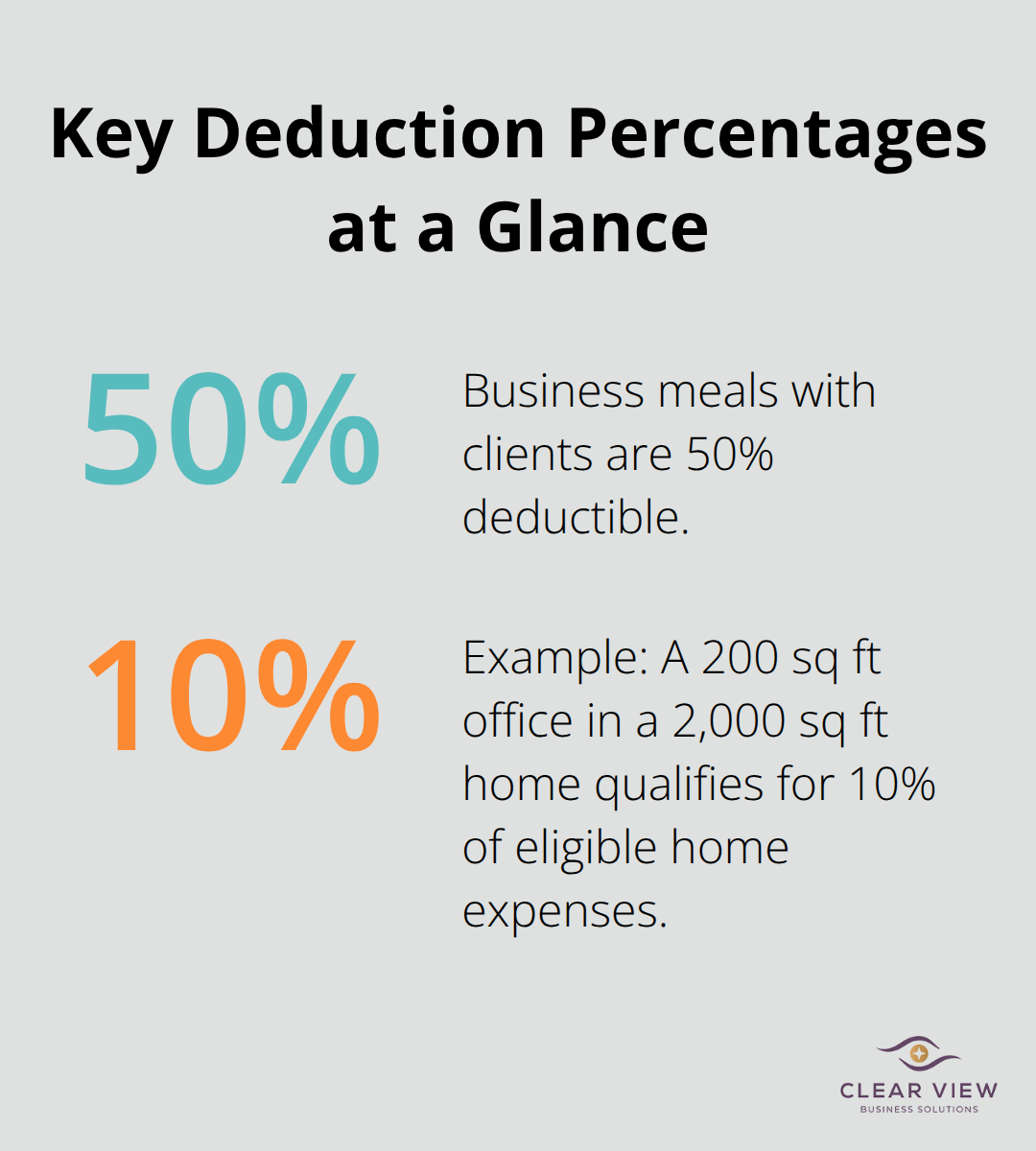
Business travel expenses including flights, hotels, and ground transportation are 100% deductible when directly related to business activities. Meals during business travel qualify for full deduction, while business meals with clients or associates are 50% deductible.
The IRS standard mileage rate for 2024 is 70 cents per mile for business use, which makes vehicle expense documentation a priority for businesses with regular travel requirements.
Professional subscriptions to industry publications, software licenses, and membership fees in business organizations all reduce taxable income when properly documented and directly related to business operations. These expenses often provide dual benefits (professional development and tax reduction) that many business owners fail to maximize.
Your home office and vehicle expenses offer even more substantial deduction opportunities that require specific documentation methods.
The home office deduction requires exclusive business use of a designated space, which means your kitchen table doesn’t qualify if you also eat meals there. The IRS offers two calculation methods: the simplified method provides a flat $5 per square foot deduction up to 300 square feet (maximum $1,500 annually), while the actual expense method allows you to deduct the percentage of home expenses equal to your office’s percentage of total home square footage.
A 200-square-foot office in a 2,000-square-foot home qualifies for 10% of mortgage interest, property taxes, utilities, and maintenance costs as business deductions. The actual expense method typically yields higher deductions for larger home offices or expensive utility bills, but requires more detailed record maintenance throughout the tax year.
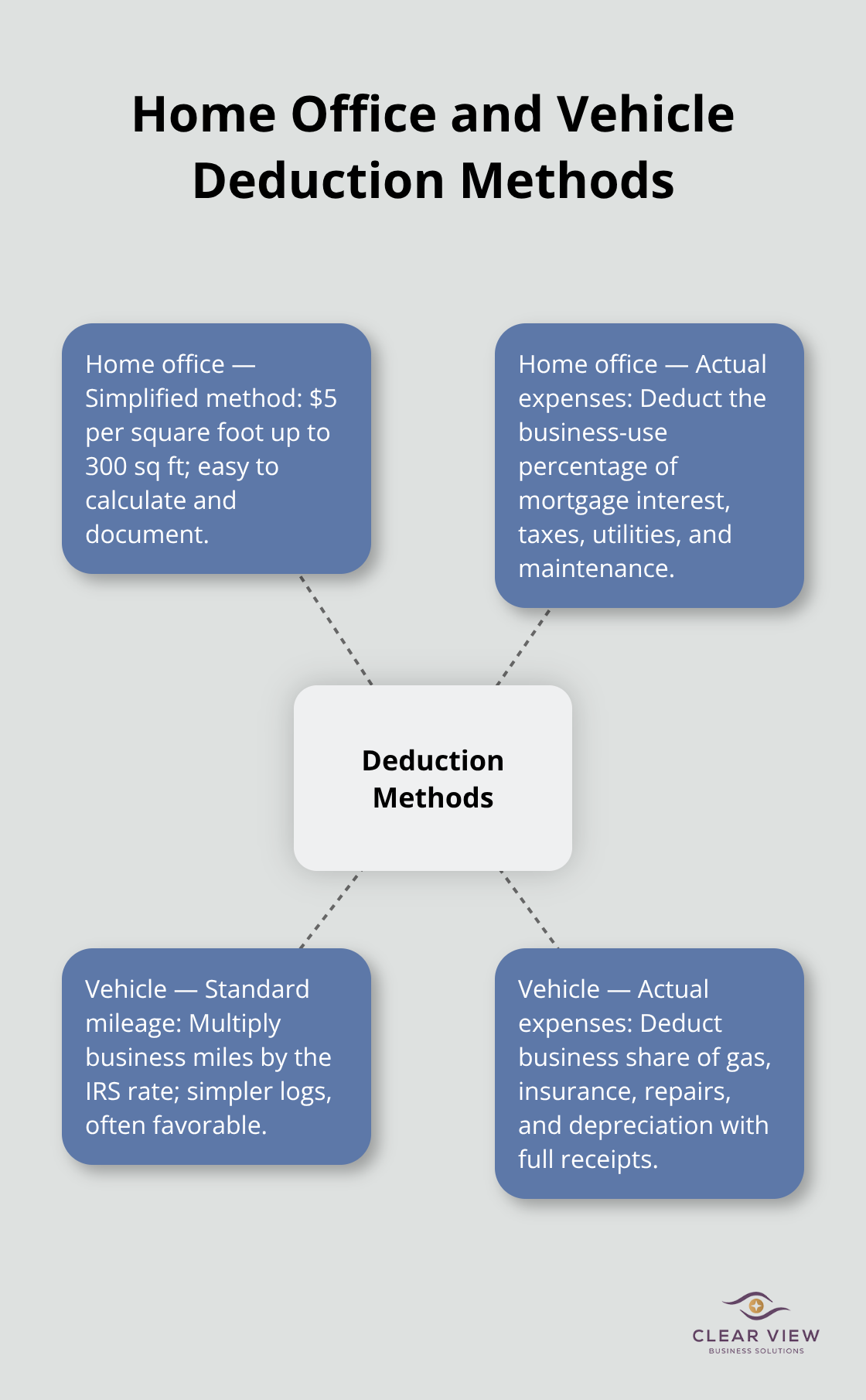
Business vehicle expenses offer two deduction approaches with distinct record maintenance requirements. The standard mileage method multiplies business miles by the IRS rate of 67 cents per mile for 2024 and requires detailed mileage logs with dates, destinations, business purposes, and odometer readings. The actual expense method deducts the business percentage of total vehicle costs (gas, insurance, repairs, and depreciation) but demands receipts for every expense plus detailed usage records.
Most small businesses benefit more from the standard mileage method because documentation is simpler and the rate often exceeds actual per-mile costs. Vehicle expenses can add up to thousands in annual deductions for businesses with regular client visits or delivery routes.
Equipment purchases like laptops, monitors, and business software qualify for immediate Section 179 deductions up to $1 million when used primarily for business purposes. Technology investments become particularly tax-efficient for home-based operations since they serve dual purposes of business advancement and tax reduction.
Small businesses often miss even more valuable deductions that hide in plain sight, including startup costs and professional development expenses.
Startup costs represent one of the most underutilized deductions in small business tax planning. New business owners can write off up to $5,000 in startup expenses during their first year of operation. The IRS defines startup costs as expenses incurred before the business begins operations, including market research, employee training, advertising campaigns, and professional fees for legal or accounting services.
Organizational costs cover incorporation fees, legal expenses for partnership agreements, and state filing fees. These deductions phase out dollar-for-dollar when total startup costs exceed $50,000, but most small businesses fall well below this threshold and miss thousands in potential savings. The immediate write-off provides substantial cash flow benefits during the critical first year when businesses need capital most.
Professional development and training expenses qualify for full deduction when they maintain or improve skills required in your current business operations. Conference attendance fees, online course subscriptions, professional certification programs, and industry workshop costs all reduce taxable income while building business capabilities. The key requirement is that education must relate directly to your existing business rather than qualify you for a new trade.
Self-employed individuals can deduct 100% of health insurance premiums paid for themselves, their spouses, and dependents as an above-the-line deduction. This deduction reduces both regular income tax and self-employment tax (which saves an additional 15.3% on the deducted amount). This deduction alone can save thousands annually for business owners who purchase individual health plans.
SEP-IRA contributions allow business owners to make deductible contributions, though contribution limits vary based on individual circumstances and plan participation. Solo 401k plans permit even higher contribution limits, allowing business owners to contribute as both employee and employer for potential deductions exceeding standard limits annually. These retirement vehicle contributions reduce current-year taxable income while building long-term wealth, making them among the most powerful tax reduction strategies available to small business owners.
Small business tax deductions offer one of the most direct paths to reduce your tax burden and improve cash flow. These deductions can save thousands annually when you claim and document them properly. You pay more taxes than necessary when you miss these opportunities and reduce funds available for business growth.
Proper documentation forms the backbone of successful tax deduction claims. The IRS requires detailed records that include receipts, mileage logs, and business purpose documentation for every deduction you claim. Digital tools and software can streamline this process, but you must maintain consistent records throughout the year to maximize your tax benefits.
Tax laws change frequently, and new deduction opportunities emerge regularly. The complexity of business tax regulations makes professional guidance valuable for most small business owners (especially those with multiple revenue streams). We at Clear View Business Solutions help small businesses maximize their tax benefits through comprehensive tax planning and preparation services.
At Clear View Business Solutions, we know you want your business to prosper without having to worry about whether you are paying more in taxes than you should or whether your business is set up correctly. The problem is it's hard to find a trusted advisor who can translate financial jargon to layman's terms and who can actually help you plan for better results.
We believe it doesn't have to be this way! No business owner should settle for working with a CPA firm that falls short of understanding what you want to achieve and how to help you get there.
Northwest Location:
7530 N. La Cholla Blvd., Tucson, AZ 85741
Central Location:
2933 N Campbell Avenue, Tucson, AZ 85719
© 2026 Clear View Business Solutions. All Rights Reserved.
At Clear View Business Solutions, we know you want your business to prosper without having to worry about whether you are paying more in taxes than you should or whether your business is set up correctly. The problem is it's hard to find a trusted advisor who can translate financial jargon to layman's terms and who can actually help you plan for better results.
We believe it doesn't have to be this way! No business owner should settle for working with a CPA firm that falls short of understanding what you want to achieve and how to help you get there. With over 20 years of experience serving hundreds of business owners like you, our team of experts combines financial expertise and proactive communication with our drive to help each client achieve results and have fun along the way.
Here's how we do it:
Discover: We start with a consultation to understand your specific goals, what's holding you back, and what success looks like for you.
Strategize & Optimize: Together, we design a customized strategy that empowers you to progress toward your goals, and we optimize our communication as partners.
Thrive: You enjoy a clear view of your business and your financial prosperity.
Schedule a consultation today, and take the first step toward being able to focus on your core business again without wondering if your numbers are right- or what they mean to your business.
In the meantime, download, "The Business Owner's Essential Guide to Tax Deductions" and make sure you aren't leaving money on the table.