


Most small business owners focus on sales and operations, leaving bookkeeping as an afterthought. That’s a mistake that costs you money and clarity.
At Clear View Business Solutions, we’ve seen firsthand how small business bookkeeping transforms financial decision-making. When your records are accurate and organized, you know exactly where your money goes and where it comes from.
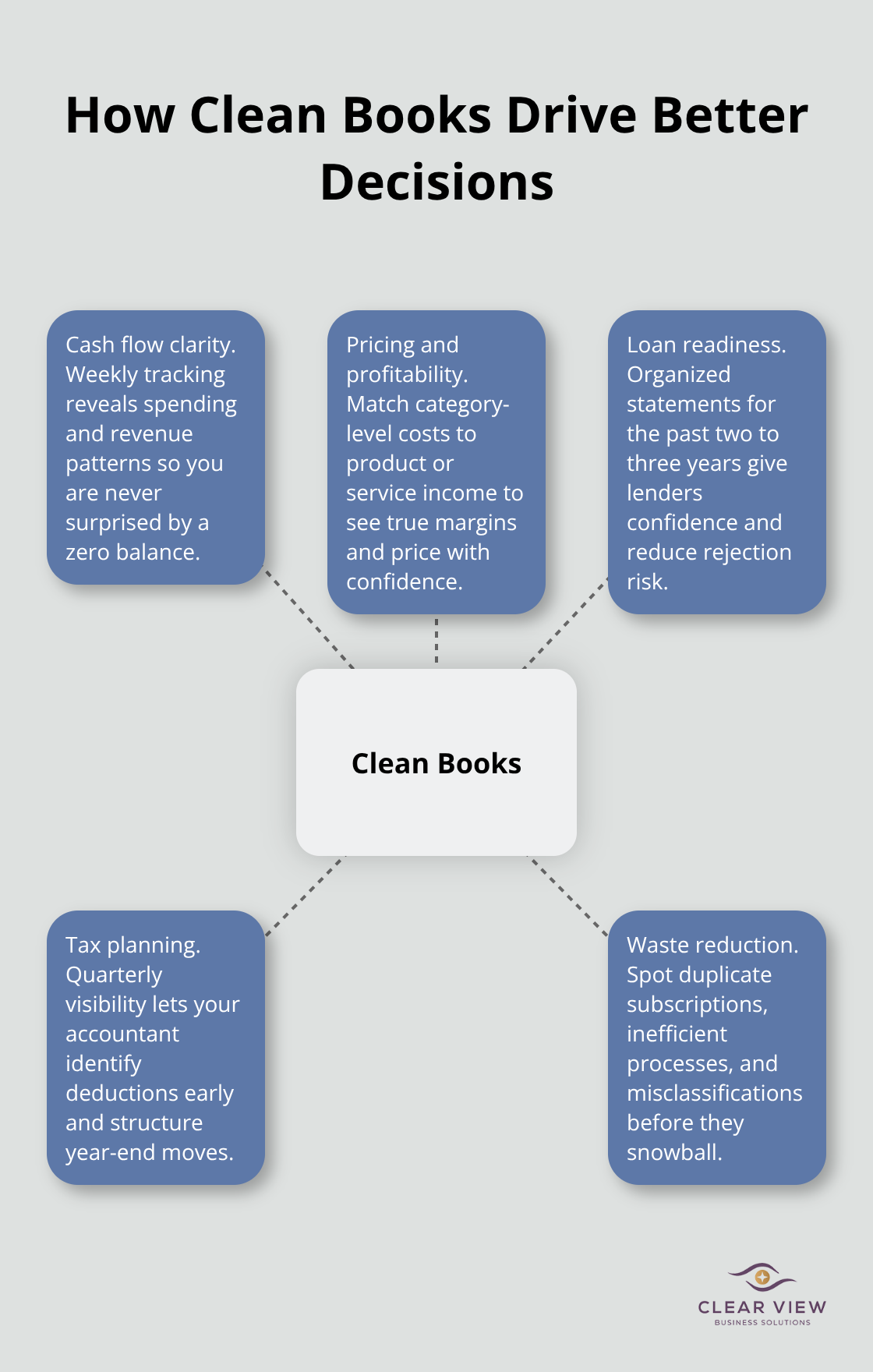
Accurate bookkeeping isn’t about compliance alone. It’s about knowing whether your business actually makes money. Small business owners who track their finances weekly, not yearly, grow fastest. A 2023 Entrepreneur.com poll revealed that cash flow remains the top concern for founders, and that anxiety typically stems from poor visibility into spending and revenue patterns. The moment you implement consistent bookkeeping, that fog lifts. You see exactly which customers generate profit, which services drain resources, and where you bleed money on unnecessary subscriptions or inefficient processes. Without this visibility, you make growth decisions blind. You might expand a product line that barely breaks even or cut a service that actually represents your most profitable offering.
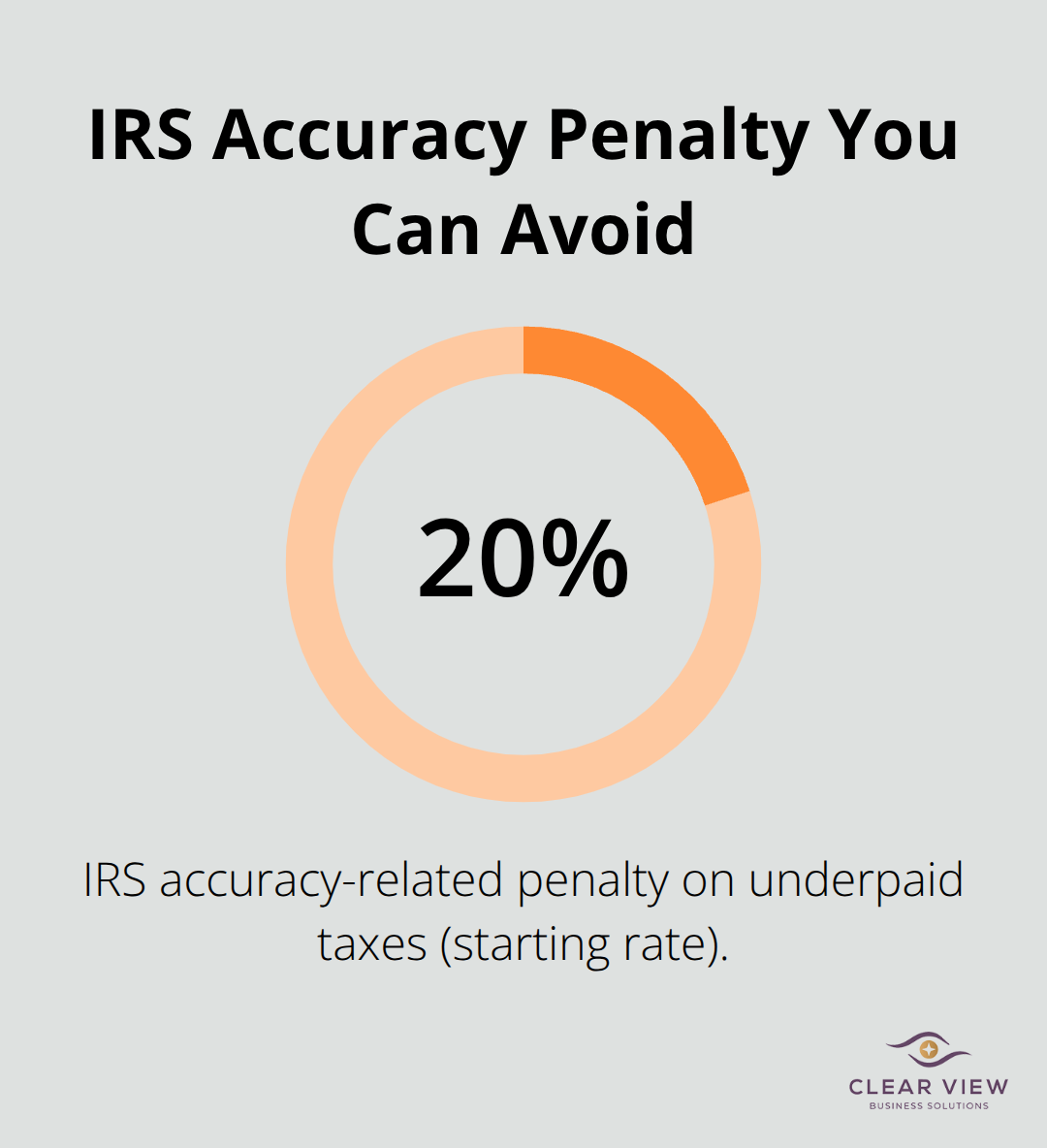
Tax penalties strike when your bookkeeping remains incomplete. The IRS assesses accuracy-related penalties starting at 20% of underpaid taxes, and that’s before interest compounds the damage. Businesses with disorganized records also struggle during loan applications. Banks want to see clean financial statements for the past two or three years, and if your records scatter across spreadsheets, emails, and receipts in a shoebox, lenders will either reject you or demand higher interest rates. A business that reconciles accounts monthly catches errors before they snowball into audit nightmares.
Misclassified expenses, duplicate entries, and bank statement mismatches become obvious in a structured monthly routine.
Organized records let you spot cash flow problems sixty days out instead of discovering them when your account hits zero. You can negotiate better payment terms with vendors, collect overdue invoices faster, and make informed decisions about inventory or staffing based on actual revenue trends, not guesses. This proactive approach prevents the scramble that catches most small business owners off guard.
Most small business owners operate on gut feeling about profitability. Proper bookkeeping forces you to confront reality. When you track expenses by category and match them against income by product or service, you uncover which parts of your business actually work. Some owners discover that their highest-revenue service carries the lowest margins because labor or materials costs hide in general expenses.
Others find that a small niche service generates disproportionate profit with minimal overhead. This insight shapes strategy. You can price confidently, focus marketing on your best customers, and eliminate unprofitable offerings without guessing.
Clean books also make quarterly tax planning possible instead of scrambling in January. You know your projected income by October, giving your accountant time to identify deductions you’d otherwise miss and structure year-end transactions for tax efficiency. That difference between reactive accounting and proactive financial leadership determines whether you keep more of what you earn.
Consistent income and expense tracking demands a weekly rhythm, not a monthly scramble. Most small business owners wait until month-end to log transactions, which creates two problems: details fade and early warning signs vanish. Revenue arrives from multiple channels-direct payments, invoices, online sales, cash-and each one needs immediate recording with the date, amount, and source. Expenses scatter across credit cards, bank transfers, and cash purchases, and they blur together if you postpone action.
Log transactions within two days while context remains fresh. This means recording that client payment Tuesday morning, categorizing the office supply purchase Wednesday, and flagging the vendor invoice before Friday. A weekly audit catches duplicate entries, misclassified transactions, and cash discrepancies before they compound. If you use accounting software like QuickBooks Online, enable bank feeds to automate transaction imports, but human review remains essential because software categorizes based on patterns and misses context. You might purchase office supplies from an office-supply vendor one week and promotional materials from the same vendor the next week, yet software flags both as office supplies. Monthly reconciliation catches these errors, but weekly transaction review prevents them from accumulating.
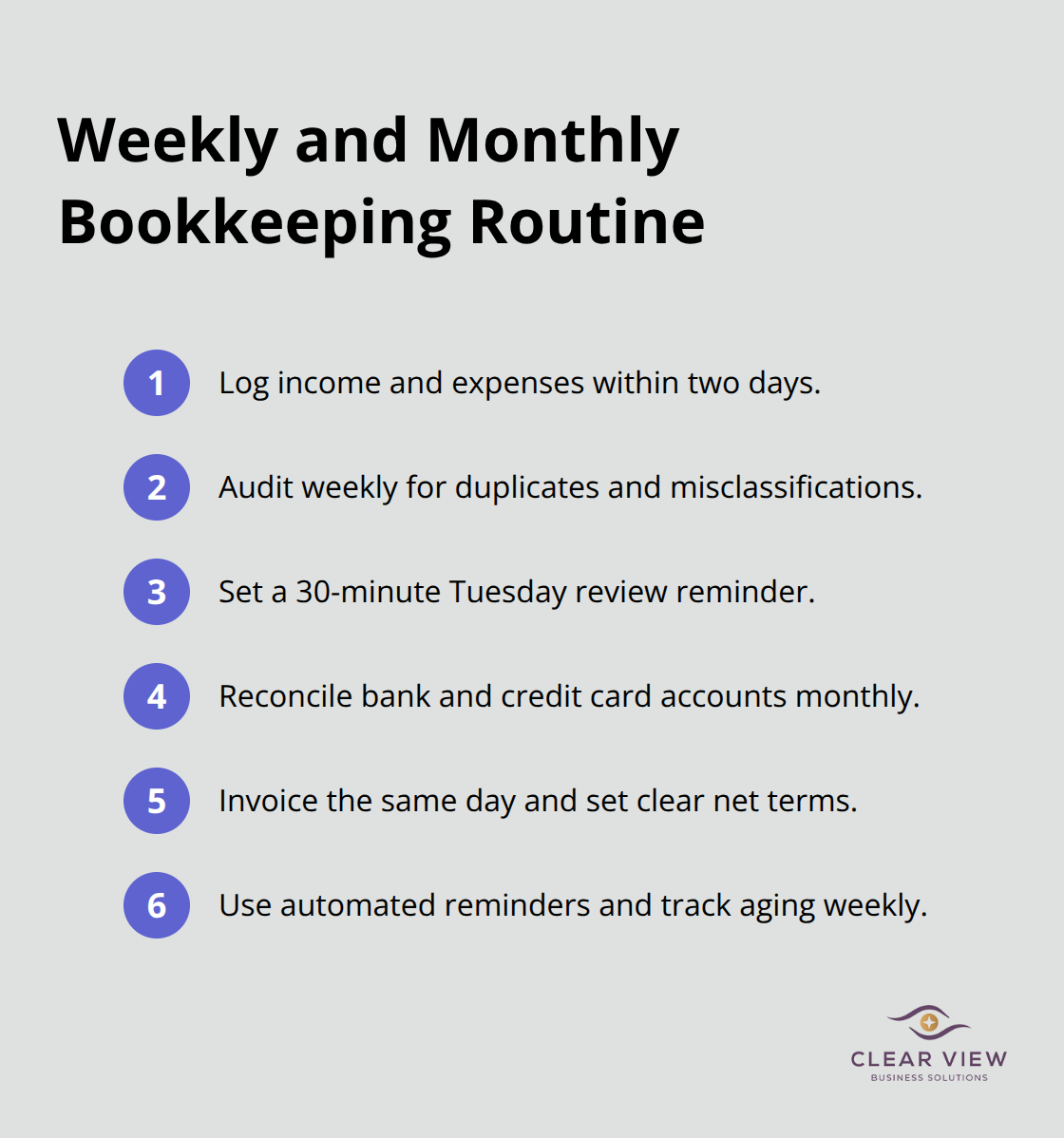
Set a calendar reminder for the same day each week-Tuesday morning works for most owners-and dedicate thirty minutes to reviewing new transactions and fixing misclassifications.
Monthly bank and credit card reconciliation separates owners who catch problems from those who discover disaster. Reconciliation means matching your accounting software records against your actual bank statement, and mismatches reveal errors, fraud, or categorization mistakes. A business owner who reconciles monthly catches a $2,000 duplicate charge in week three instead of discovering it during tax season.
Open your bank statement and compare every deposit and withdrawal against your software records, then investigate any gaps. Common issues include outstanding checks that haven’t cleared, deposits recorded in software but not yet processed by the bank, and transactions recorded twice. Credit card reconciliation follows the same logic: match statement charges against software entries and verify that payments posted correctly. This process takes forty-five minutes to an hour monthly and saves hours of forensic accounting later. Accounts that drift unreconciled for three months often reveal problems so tangled that reconstructing the truth requires professional help.
Managing invoices and accounts receivable means issuing them promptly and following up when payment delays occur. An invoice issued on day fifteen of your delivery instead of day one represents a fifteen-day cash flow loss, and small delays compound across multiple customers. Issue invoices the same day you deliver the service or product, then set payment terms clearly-net 30 is standard, net 15 accelerates cash.
Software like QuickBooks Online includes automated payment reminders that email customers when invoices approach due dates, which recovers roughly 15 to 20 percent of payments that would otherwise slip past the deadline. Track aging reports weekly to see which invoices remain unpaid and for how long, then contact customers on day thirty-five if payment hasn’t arrived. This aggressive follow-up prevents invoices from aging past ninety days, when collection becomes exponentially harder. Some owners hesitate to contact customers about overdue invoices, fearing relationship damage, but customers respect businesses that protect their cash flow. Late payments often signal customer financial stress, so early contact sometimes reveals a problem you can solve rather than a customer who intends to avoid payment. Implement a simple rule: invoices over thirty days old receive a phone call or message the same week.
These weekly and monthly tasks form the operational backbone of your bookkeeping system. The next step involves selecting the right tools and systems to execute these tasks efficiently without consuming your entire week.
The right accounting software reduces your weekly bookkeeping time from two hours to thirty minutes, which means you actually maintain the system instead of abandoning it by month three. QuickBooks Online dominates small business bookkeeping because it connects directly to your bank and credit card accounts, automatically importing transactions so you don’t manually enter every charge. This bank-feed feature alone saves time and reduces errors. Xero and FreshBooks offer similar automation, but QuickBooks Online’s market position means your accountant or bookkeeper almost certainly knows it well, reducing friction when you need professional support.
The software costs between $15 and $65 monthly depending on features, which pays for itself the first time you catch a categorization error before tax season. Set up the chart of accounts to match your actual business structure-don’t use generic defaults that lump all expenses together. If you sell both products and services, create separate income categories so you can measure profitability for each.
If you operate multiple locations or serve distinct customer segments, add cost centers that track spending by division. This customization takes two hours initially but transforms your financial reports from confusing to actionable. Enable automatic transaction categorization, but verify the software’s guesses weekly because it misclassifies roughly 10 to 15 percent of transactions based on merchant names alone. A transaction from an office-supply vendor might be equipment, promotional materials, or inventory depending on context, and software cannot read your intent.
Automation handles the repetitive work, but human judgment remains irreplaceable. The moment your business grows beyond solo operation, hiring a bookkeeper or outsourced bookkeeping service becomes financial common sense rather than luxury. A part-time bookkeeper contractor costs $2,100 to $3,000 monthly and handles transaction entry, bank reconciliation, invoice management, and payroll integration-work that otherwise consumes fifteen to twenty hours of your time weekly.
For small businesses generating $500,000 to $2 million in annual revenue, this investment returns itself through reclaimed time and fewer errors. Interview candidates who demonstrate QuickBooks expertise and ask specifically how they handle bank reconciliation and accounts-receivable follow-up, since these tasks directly impact your cash flow. Some owners prefer outsourced bookkeeping services that charge hourly or per-transaction fees, which works well if your transaction volume fluctuates seasonally.
Others hire in-house bookkeepers for stability and direct oversight. The choice depends on your business complexity and whether you need someone embedded in your operations or simply someone who logs in remotely once weekly. Regardless of the structure, insist on cloud-based software with secure access controls so your bookkeeper works from anywhere and you maintain visibility into your accounts without manual file transfers. The difference between a business owner drowning in spreadsheets and one sleeping soundly at night often comes down to whether they invested in the right person and system early enough.
Small business bookkeeping forms the foundation that separates owners who grow confidently from those who operate in financial fog. You’ve seen how accurate records drive better decisions, reveal profitability, and prevent costly tax penalties. Start with cloud-based software like QuickBooks Online, customize your chart of accounts to reflect your actual business structure, and commit to weekly transaction review and monthly reconciliation. This rhythm takes ninety minutes weekly and transforms your financial visibility completely.
Systems alone don’t guarantee success, however. As your business grows beyond solo operation, professional support becomes essential-a bookkeeper or outsourced bookkeeping service handles the detailed work while you focus on revenue-generating activities. This person catches categorization errors, manages accounts receivable aggressively, and keeps your books tax-ready throughout the year instead of creating chaos in January. We at Clear View Business Solutions provide full-cycle bookkeeping with QuickBooks training, tax planning that saves money, and personalized guidance that transforms your financial foundation.
The difference between struggling with finances and sleeping soundly comes down to one decision: invest in proper bookkeeping now. Contact Clear View Business Solutions to build the financial systems that support growth and protect your bottom line.




At Clear View Business Solutions, we know you want your business to prosper without having to worry about whether you are paying more in taxes than you should or whether your business is set up correctly. The problem is it's hard to find a trusted advisor who can translate financial jargon to layman's terms and who can actually help you plan for better results.
We believe it doesn't have to be this way! No business owner should settle for working with a CPA firm that falls short of understanding what you want to achieve and how to help you get there.
Northwest Location:
7530 N. La Cholla Blvd., Tucson, AZ 85741
Central Location:
2933 N Campbell Avenue, Tucson, AZ 85719
© 2026 Clear View Business Solutions. All Rights Reserved.
At Clear View Business Solutions, we know you want your business to prosper without having to worry about whether you are paying more in taxes than you should or whether your business is set up correctly. The problem is it's hard to find a trusted advisor who can translate financial jargon to layman's terms and who can actually help you plan for better results.
We believe it doesn't have to be this way! No business owner should settle for working with a CPA firm that falls short of understanding what you want to achieve and how to help you get there. With over 20 years of experience serving hundreds of business owners like you, our team of experts combines financial expertise and proactive communication with our drive to help each client achieve results and have fun along the way.
Here's how we do it:
Discover: We start with a consultation to understand your specific goals, what's holding you back, and what success looks like for you.
Strategize & Optimize: Together, we design a customized strategy that empowers you to progress toward your goals, and we optimize our communication as partners.
Thrive: You enjoy a clear view of your business and your financial prosperity.
Schedule a consultation today, and take the first step toward being able to focus on your core business again without wondering if your numbers are right- or what they mean to your business.
In the meantime, download, "The Business Owner's Essential Guide to Tax Deductions" and make sure you aren't leaving money on the table.