


Setting up an ITIN correctly is one of the most overlooked steps in tax compliance. Many people make costly mistakes during the application process that delay approval or trigger IRS scrutiny.
At Clear View Business Solutions, we’ve created this guide to walk you through Intuit ITIN guidance and help you avoid common pitfalls. Whether you’re applying for the first time or renewing an existing ITIN, the right approach makes all the difference.
An ITIN is a nine-digit identification number the IRS issues for federal tax purposes when you don’t qualify for a Social Security Number. The IRS issues roughly 2 million ITINs annually, and more than 2 million ITINs will expire this year alone, according to IRS data. You need an ITIN if you have a federal tax purpose and cannot obtain an SSN. This includes nonresident aliens, resident aliens required to file tax returns, spouses of U.S. citizens or resident aliens, and dependents living abroad. Most people misunderstand what an ITIN actually does. They assume it grants work authorization or immigration status. It doesn’t. An ITIN exists strictly for reporting federal taxes and claiming certain tax credits. The IRS is explicit: an ITIN does not qualify you for Social Security benefits, work authorization, immigration status, or identification outside the federal tax system. This distinction matters enormously because many people waste time and money pursuing an ITIN when what they actually need is an SSN or work visa.
The gap between what people think an ITIN does and what it actually does creates real problems. You cannot use an ITIN to onboard employees in payroll systems like QuickBooks Online Payroll, which only accepts SSNs for employee identification. If you manage workers and think an ITIN solves your payroll setup, you will hit a wall immediately. You also cannot use an ITIN as identification outside the federal tax system. The IRS explicitly states that you should not present an ITIN as ID for any purpose other than federal tax reporting.

Foreign property buyers or sellers who need a Taxpayer Identification Number for reduced withholding can use an ITIN, but only for that specific tax transaction purpose. If someone tells you an ITIN opens doors for employment or identification, they are wrong, and following that advice will cost you time and create compliance headaches.
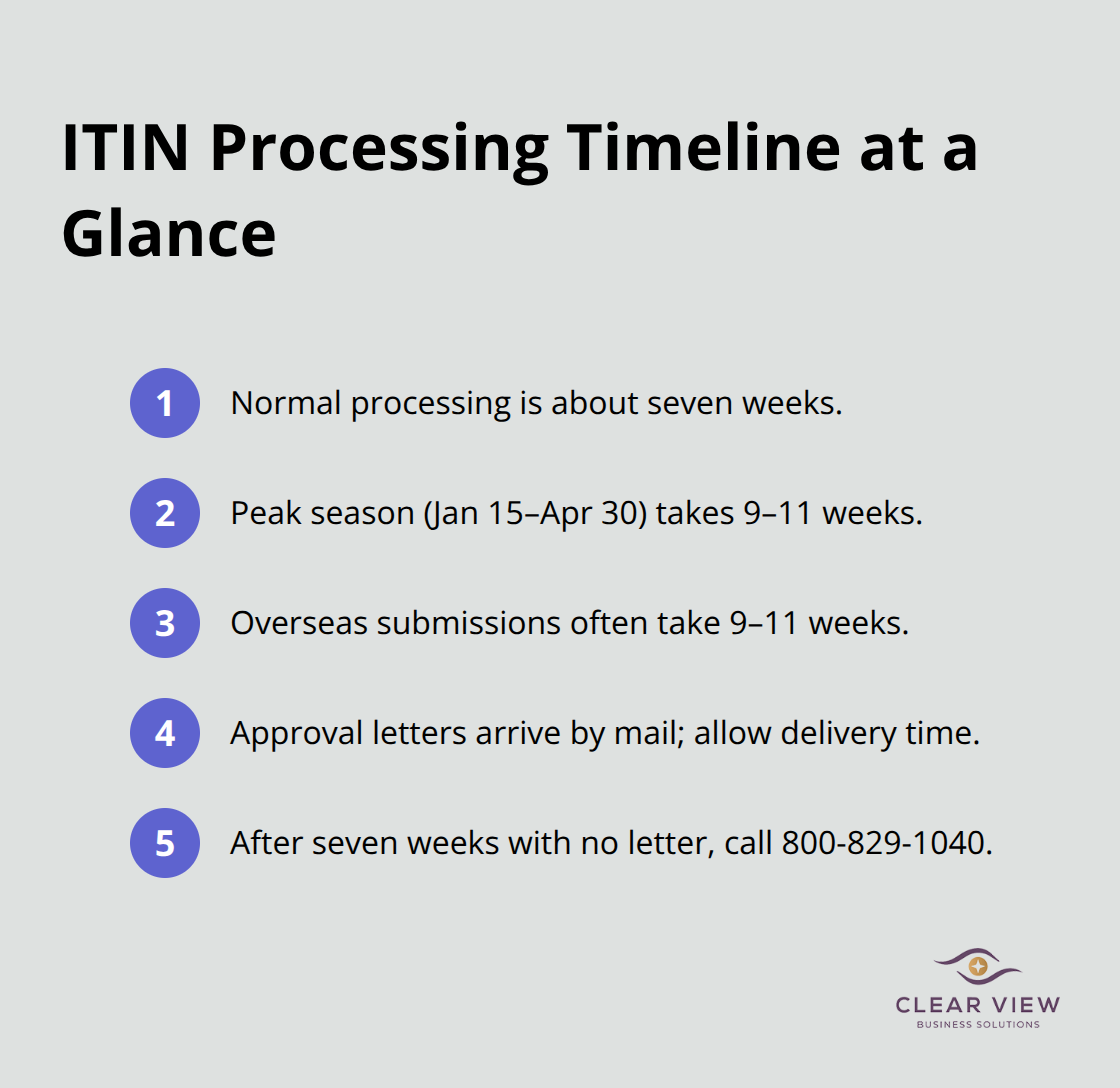
The IRS requires original or certified copies of identification documents with your Form W-7 application-not photocopies. Photocopies face rejection outright. You will need your birth certificate or passport, plus immigration documents if applicable, your full name (including birth name if different), your birth date and birthplace, and your prior ITIN if you have had one before. Processing takes about seven weeks normally, but stretches to nine to eleven weeks during peak season (January 15 through April 30) or if you apply from overseas. The approval letter arrives by mail, so plan for mail delivery delays. If you have not received anything after seven weeks, call the IRS at 800-829-1040 to check status.
Many people submit incomplete applications or use photocopies and then spend weeks wondering why the IRS rejected their request.
Start with the official Form W-7 instructions and gather every document the IRS lists before you submit anything. Incomplete applications waste weeks of your time. The IRS will not process your ITIN application until you provide original or certified copies of all required documents. Take time to organize your paperwork and verify that each document meets IRS standards. This upfront effort prevents rejection and keeps your application moving forward on schedule. Once you understand what the IRS actually requires, the next step involves recognizing the mistakes that derail most applicants-and how to avoid them entirely.
Most ITIN rejections stem from three preventable errors that cost applicants weeks of delay. Understanding what trips up most people helps you sidestep these problems entirely.
The first mistake is submitting Form W-7 with incomplete information or handwriting that the IRS cannot read. The IRS processes millions of applications annually, and illegible entries trigger manual review or outright rejection. You must fill out every field on Form W-7 clearly and completely. If a field does not apply to you, write N/A rather than leaving it blank. Sloppy completion wastes three to four weeks while the IRS requests clarification or rejects your application outright.
The second critical error involves using photocopies instead of original or certified documents. The IRS will reject photocopies immediately according to their official guidance. Your birth certificate, passport, and any immigration documents must be originals or certified copies obtained directly from the issuing agency. Many applicants waste three to four weeks submitting photocopies, receiving rejection notices, then ordering certified copies and resubmitting. This single mistake doubles your processing time and frustrates your timeline.
The third major mistake is misunderstanding ITIN expiration dates. If your ITIN was not used on a tax return for tax years 2023, 2024, or 2025, it expires December 31, 2026. The IRS does not send expiration notices to your home address, so you must track your own renewal deadline. Expired ITINs prevent you from filing returns, claiming credits, or conducting any federal tax business until you renew.

Renewal requires submitting Form W-7 again with current identification documents, and processing takes the same seven to eleven weeks as initial applications. Delaying renewal until April creates a crisis when you realize your ITIN expired and you cannot file your return on time. Plan your renewal now if your ITIN has not been used recently.
Many applicants also fail to understand that assignment date affects credit eligibility. The date the IRS receives your ITIN package influences whether you qualify for credits like the Child Tax Credit, Credit for Other Dependents, and American Opportunity Tax Credit. Submitting late in the tax year can disqualify you from credits you would have received with an earlier application.
If you obtain an SSN after establishing an ITIN, you must notify the IRS to merge your records under the SSN. Mail a letter with your full name, mailing address, ITIN, and SSN to the Austin ITIN Operation. Failing to consolidate records means the IRS maintains separate tax histories, which creates confusion during audits and delays refunds. These mistakes are entirely avoidable with proper planning and attention to IRS requirements. The next section covers the best practices that keep your application on track and moving forward smoothly.
The difference between a fast ITIN approval and a months-long delay comes down to execution. You cannot fix mistakes after submission, so you must get the details right the first time. This approach eliminates rejection cycles and keeps your timeline on track. Most applicants who experience delays made preventable errors that a structured approach would have caught before they mailed anything to the IRS.
The smartest move is to work with a tax professional who handles ITIN applications regularly. A tax professional knows exactly which documents the IRS accepts, how to complete Form W-7 without errors, and what disqualifies applications before you waste postage. The IRS processes applications faster when they arrive complete and correct, and a professional ensures yours meets that standard.
Many applicants try to save money by handling their ITIN alone, then lose weeks waiting for rejection notices. The cost of professional guidance pays for itself the moment your application avoids rejection. A tax professional also understands nuances like assignment dates affecting credit eligibility and expiration renewal deadlines that catch most people off guard. If you have claimed an ITIN before, a professional verifies your prior ITIN number and prevents the IRS from treating your renewal as a duplicate application, which creates processing delays.
You must organize your entire document package before you touch Form W-7. Pull your original birth certificate or passport, gather any immigration documents, and verify each document is original or certified, not a photocopy. Write down your exact birth date and birthplace, your full name including your birth name if different, and your prior ITIN if applicable.
Complete Form W-7 in clear, legible handwriting or type it if your handwriting is illegible. Write N/A in fields that do not apply rather than leaving blanks, which triggers IRS requests for clarification. This preparation step prevents the most common rejection reasons and accelerates processing.
You should set a deadline to mail everything during normal tax season, not during peak season from January 15 through April 30. Mailing in September or October gets your application processed in the standard seven weeks. If you mail in March, expect delays.
Use a delivery method that provides tracking, like certified mail with return receipt, so you can verify the IRS received your package. Keep your tracking number and delivery confirmation for your records. This documentation protects you if questions arise about whether the IRS actually received your submission.
After mailing, wait the full seven weeks before contacting the IRS. If seven weeks pass without receiving your approval letter by mail, call 800-829-1040 to check status. Do not assume silence means rejection. The IRS processes millions of applications annually, and mail delivery adds time beyond processing itself.
Setting up your ITIN correctly eliminates months of frustration and keeps your tax filing on schedule. The process itself is straightforward when you avoid the three critical mistakes that derail most applicants: incomplete Form W-7 submissions, photocopies instead of original documents, and missed expiration deadlines. You now understand what an ITIN actually does, what documents the IRS requires, and how to time your submission to avoid peak-season delays.
Proper ITIN setup protects your tax compliance and prevents the rejection cycles that waste weeks of your time. When you submit a complete application with original documents during normal tax season, the IRS processes your request in approximately seven weeks. You also position yourself to claim tax credits like the American Opportunity Tax Credit and Child Tax Credit, which depend on assignment dates and proper documentation.
More than 2 million ITINs expire this year, and many people will miss renewal deadlines because they did not plan ahead. We at Clear View Business Solutions help individuals and small businesses navigate ITIN setup and tax planning without the rejection cycles that most applicants face. Contact us today to streamline your ITIN application and keep your tax compliance on track.




At Clear View Business Solutions, we know you want your business to prosper without having to worry about whether you are paying more in taxes than you should or whether your business is set up correctly. The problem is it's hard to find a trusted advisor who can translate financial jargon to layman's terms and who can actually help you plan for better results.
We believe it doesn't have to be this way! No business owner should settle for working with a CPA firm that falls short of understanding what you want to achieve and how to help you get there.
Northwest Location:
7530 N. La Cholla Blvd., Tucson, AZ 85741
Central Location:
2933 N Campbell Avenue, Tucson, AZ 85719
© 2026 Clear View Business Solutions. All Rights Reserved.
At Clear View Business Solutions, we know you want your business to prosper without having to worry about whether you are paying more in taxes than you should or whether your business is set up correctly. The problem is it's hard to find a trusted advisor who can translate financial jargon to layman's terms and who can actually help you plan for better results.
We believe it doesn't have to be this way! No business owner should settle for working with a CPA firm that falls short of understanding what you want to achieve and how to help you get there. With over 20 years of experience serving hundreds of business owners like you, our team of experts combines financial expertise and proactive communication with our drive to help each client achieve results and have fun along the way.
Here's how we do it:
Discover: We start with a consultation to understand your specific goals, what's holding you back, and what success looks like for you.
Strategize & Optimize: Together, we design a customized strategy that empowers you to progress toward your goals, and we optimize our communication as partners.
Thrive: You enjoy a clear view of your business and your financial prosperity.
Schedule a consultation today, and take the first step toward being able to focus on your core business again without wondering if your numbers are right- or what they mean to your business.
In the meantime, download, "The Business Owner's Essential Guide to Tax Deductions" and make sure you aren't leaving money on the table.