


Most startups fail because of cash flow problems, not bad ideas. At Clear View Business Solutions, we’ve seen firsthand how financial planning for startups separates the businesses that survive from those that don’t.
This guide walks you through building a realistic budget, forecasting revenue accurately, and adjusting your finances as your business grows. You’ll learn practical steps to manage money from day one.
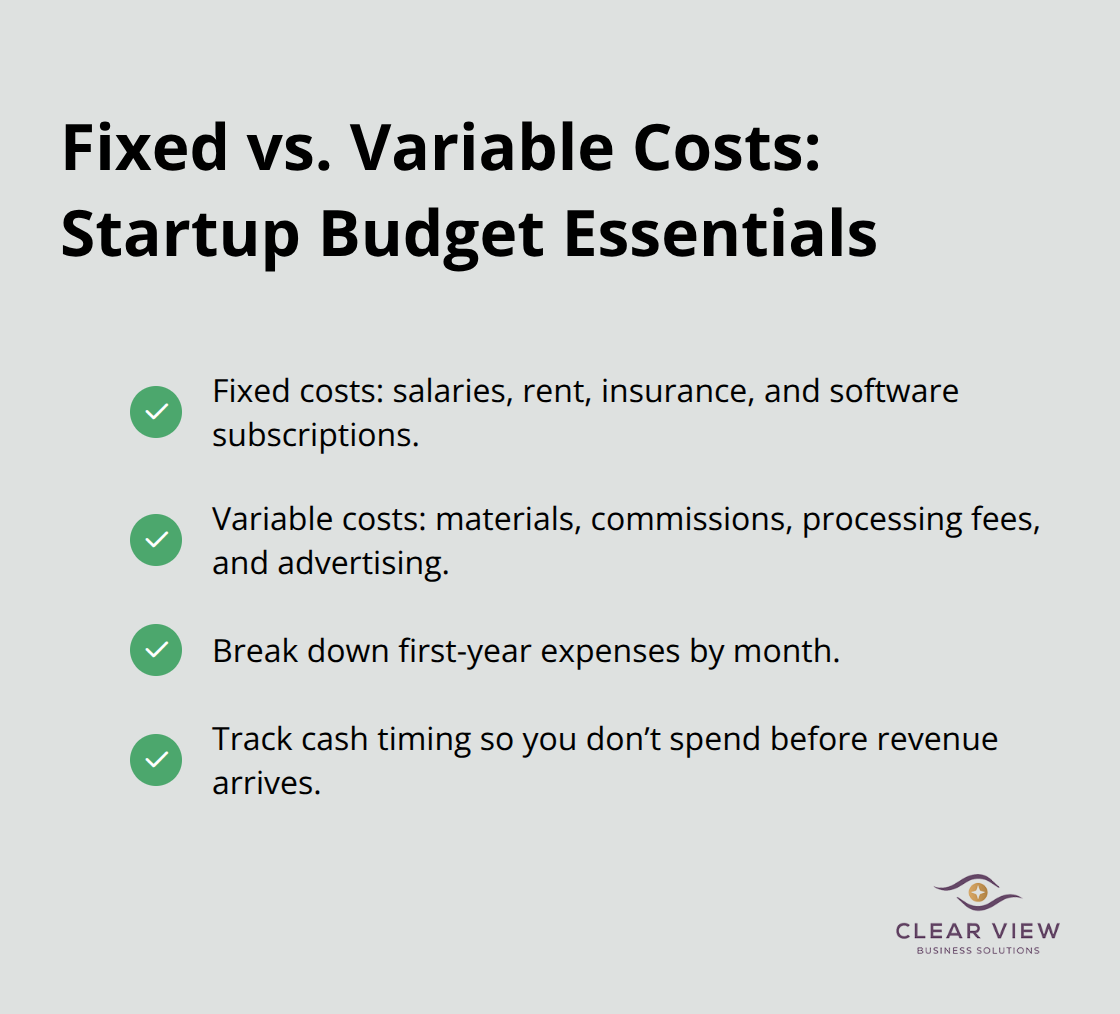
Your first budget isn’t about perfection-it’s about knowing where your money goes and what you can actually afford. The startups that survive treat their budget like a working document they update monthly, not a one-time exercise they file away. Start by separating your costs into two categories: fixed costs and variable costs that depend on whether they change with your sales volume.
Fixed costs typically include salaries, rent, insurance, and software subscriptions. Variable costs include materials, commissions, payment processing fees, and advertising spend tied to customer acquisition. The U.S. Chamber of Commerce recommends breaking down your first-year expenses by month so you can see exactly when cash leaves your account. This matters because many startups run out of money not because they’re unprofitable, but because they spend cash before they earn it.
Allocate funds to the areas that directly keep your business running: payroll, infrastructure, and customer acquisition. Payroll is almost always your largest expense-plan conservatively here. If you’re the founder, decide whether you’ll take a salary immediately or defer compensation to extend runway. Many founders make the mistake of paying themselves first, which drains cash that could fund growth.
Next, estimate infrastructure costs including office space or coworking, cloud services, tools, and equipment. Then account for customer acquisition, which varies wildly by industry but shouldn’t be a guess. If you’re selling B2B software, calculate your customer acquisition cost by dividing total marketing spend by new customers acquired. If you don’t have historical data, research what similar companies spend or run small test campaigns to get real numbers.
Most founders underestimate expenses by 20% to 30%, and that gap kills startups. Add a contingency buffer of 10% to 15% above your base expenses to account for unexpected costs like equipment failure, unplanned hires, or market shifts. This isn’t pessimism-it’s survival.
Track your actual spending against your budget every single month. If you spend more than projected in any category, adjust immediately rather than hoping next month will be better. The startups that succeed don’t wait until they’re out of cash to make changes; they adjust when they notice a trend. Use a simple spreadsheet or accounting software like QuickBooks to categorize every expense and compare actuals to your budget. This discipline forces you to make intentional decisions about where money goes instead of letting spending drift.
Once you have a solid budget in place, the next step is to project what your revenue will actually look like and how it flows through your business over time.
Revenue forecasting separates startups that understand their business from those that hope for the best. Most founders either overestimate revenue wildly or avoid forecasting altogether, both of which are mistakes. The U.S. Chamber of Commerce recommends forecasting monthly sales by unit and price point for your first two years, then shifting to quarterly estimates beyond that. This level of detail forces you to think through how customers actually buy from you instead of plugging in an arbitrary growth curve.
Start with a bottom-up approach: count the number of potential customers you can realistically reach, estimate your conversion rate based on similar products or test campaigns, and multiply by your average sale price. If you’re selling B2B services at $5,000 per client and you can realistically close 2 customers per month in year one, your monthly revenue starts at $10,000. That’s concrete. Then use a top-down sanity check by estimating your total addressable market and confirming your projections don’t claim an unrealistic market share. If your TAM is $10 million and you’re forecasting $50 million in year three, something is wrong with your assumptions. The startups that attract seed funding typically anchor their projections to real market data rather than hockey-stick growth patterns that imply unsustainable acceleration. According to PitchBook, the median seed deal size was $3.9 million for rounds between 2020 and 2023, which means investors expect founders to have thought through realistic revenue paths.
Once you have revenue projections, build a 12-month cash flow forecast that accounts for the timing of cash in and out of your account. This is where many startups fail: they look profitable on paper but run out of cash because customers pay 30 or 60 days after the invoice, while expenses hit immediately. Create a month-by-month projection showing when revenue arrives, when payroll hits, when vendor payments are due, and when you’ll need additional funding.
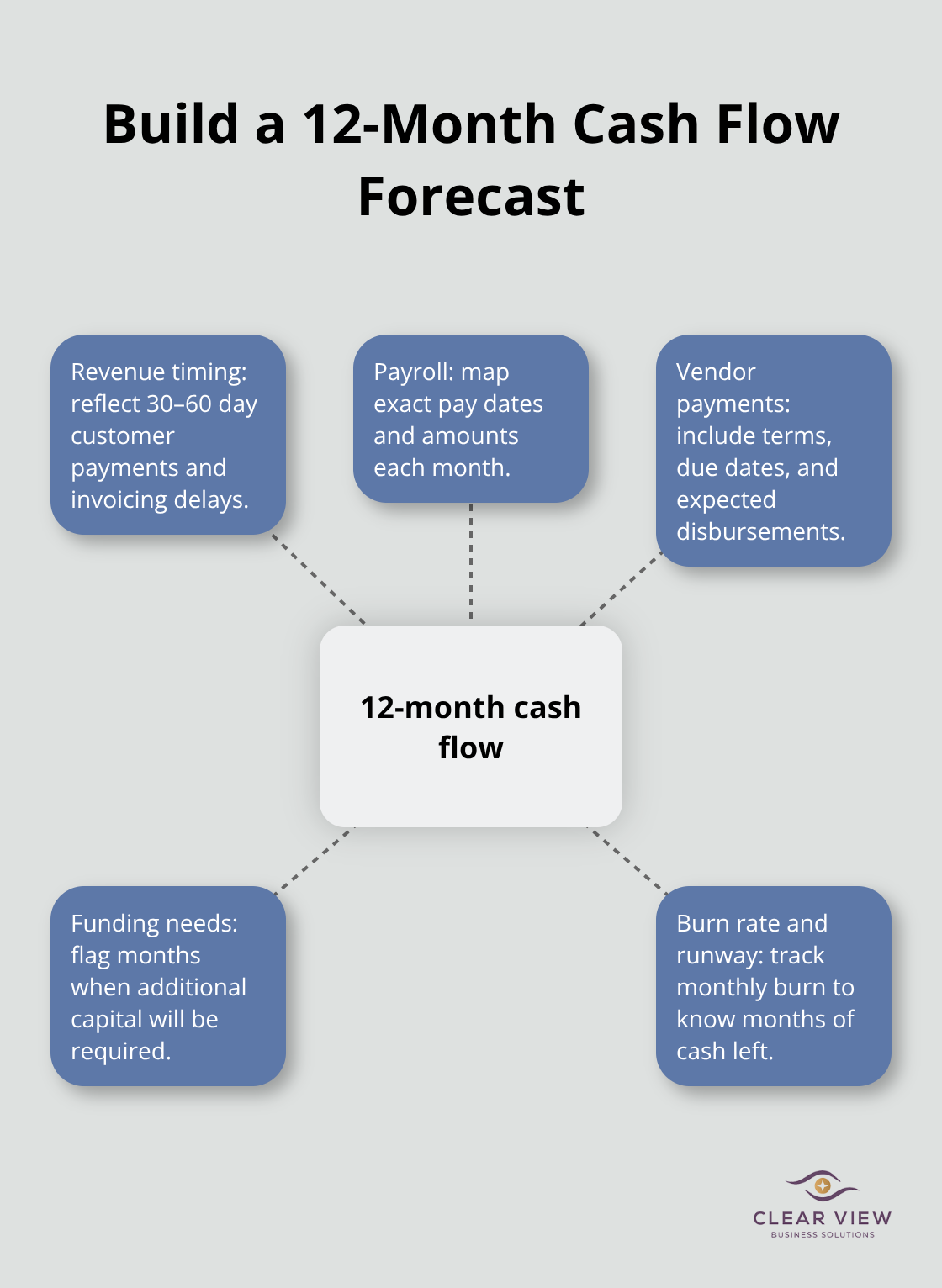
Calculate your cash burn rate by dividing your monthly operating expenses by your cash on hand to determine your runway in months. If you’re burning $50,000 monthly and have $150,000 in the bank, you have three months before you’re out of cash. That number should terrify you into action.
Update your forecast every six months minimum as actual results come in, comparing what you projected against what actually happened. If you projected $50,000 in revenue but only hit $35,000, you need to adjust your forecast immediately rather than hoping next month improves. Track your actual spending against projected spending in the same way. The startups that survive obsess over this gap between plan and reality, making adjustments quickly instead of waiting until cash runs out. Use accounting software with real-time dashboards so you see cash position and spending patterns without waiting for month-end reports. This discipline transforms forecasting from a fundraising document into a tool that actually guides daily decisions about hiring, marketing spend, and when to raise your next round.
With accurate revenue forecasts in place, you can now adjust your budget as your business grows and prepare for the financial changes that come with scaling.
Most startups make the same mistake when they finally start generating real revenue: they treat their original budget as sacred rather than a living tool. The moment your revenue trajectory becomes clear, your budget becomes outdated. Founders often cling to budgets built on assumptions that no longer hold, which forces them to either overspend recklessly or underfund growth at the exact moment they should be accelerating. Your budget needs to shift with your revenue.
If you projected $30,000 monthly revenue and you’re consistently hitting $50,000, your fixed costs stay the same but your variable costs should increase proportionally. This means higher payment processing fees, more advertising spend to sustain growth, and potentially more staff to handle increased customer volume. Calculate what percentage of revenue each expense category consumed in your first months, then apply that percentage to your actual revenue. If customer acquisition cost you 25% of revenue when you were small, it shouldn’t suddenly become 40% just because you’re larger. Track this ratio monthly and adjust spending immediately if it drifts. The startups that scale successfully treat budget adjustments as a monthly discipline, not an annual event.
Headcount represents almost always your largest expense category, and it’s where founders waste the most money during growth phases. The impulse to hire aggressively once you have revenue kills startups faster than underfunding. Hire only when you have concrete evidence that a specific role creates bottlenecks that prevent revenue growth. If your sales team can’t close deals because they’re drowning in administrative work, hire an operations person. If your product has bugs customers report, hire a developer. Don’t hire for roles you think you’ll need someday.
When you do hire, document what success looks like for that position and track whether they actually move key metrics. If you hire a customer success manager and churn doesn’t improve within three months, you’ve made a hiring mistake. Plan headcount growth in your financial model by identifying specific roles, their salaries with benefits, and the exact quarter you’ll bring them on. Most founders underestimate benefits costs at 20% to 30% above base salary, so account for payroll taxes, health insurance, and other overhead. Seasonal businesses should avoid permanent hires for temporary demand spikes; use contractors instead to keep fixed costs manageable.
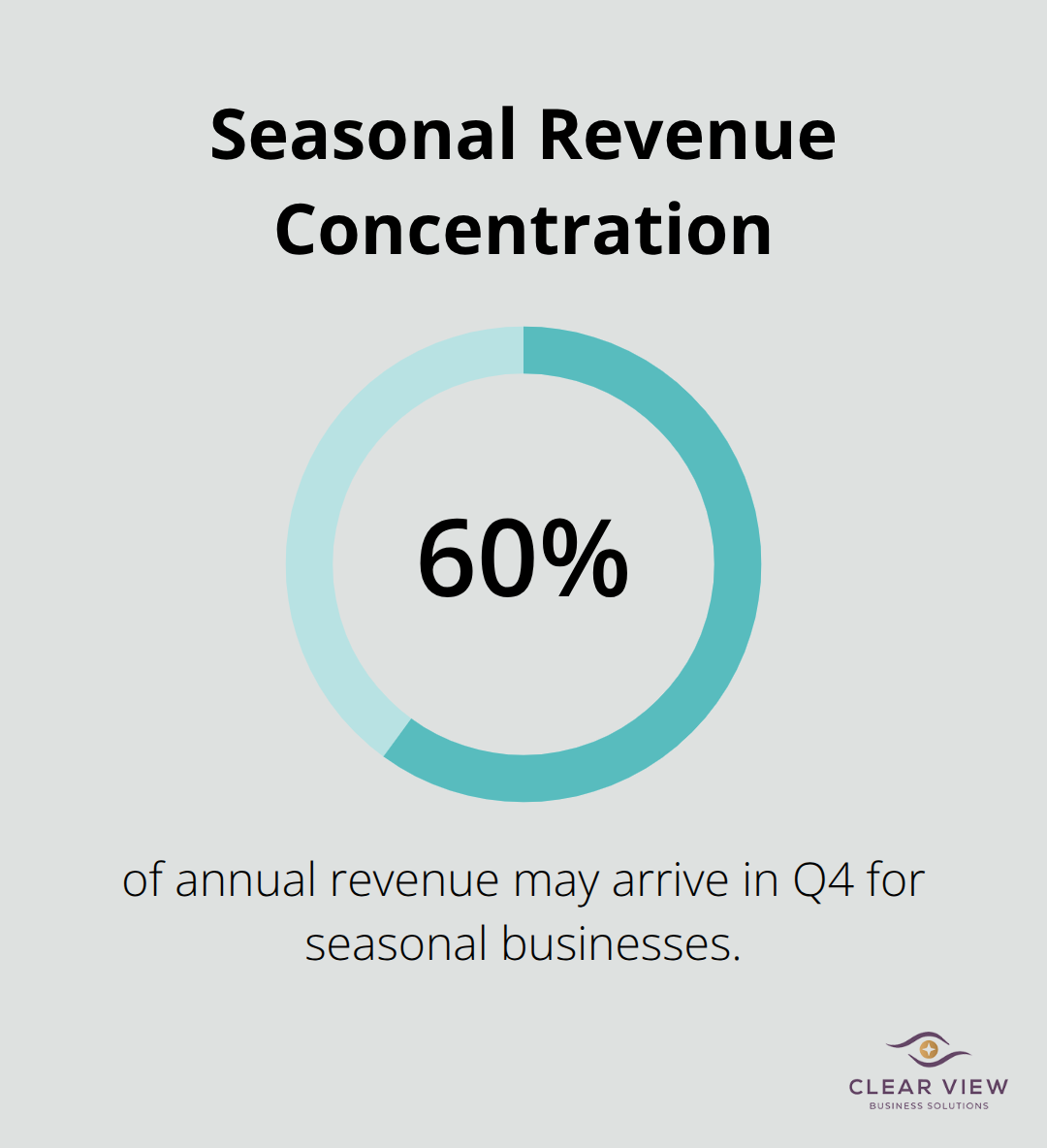
Seasonal fluctuations destroy startups that don’t plan for them. If your business has predictable busy and slow seasons, your budget must account for this timing mismatch. Many startups see strong Q4 revenue but face January and February cash crunches because they spent all their cash in December. Build a cash flow projection that maps out revenue by season, not just an annual average. If you know 60% of your annual revenue comes in Q4, plan your expenses so you have enough cash reserves to cover Q1 and Q2 operations. This might mean deferring non-essential spending until after your peak season or building a line of credit specifically for seasonal gaps.
Some founders use venture debt to smooth out seasonal cash needs rather than raising expensive equity.
Calculate your cash position at the end of each month, not just each quarter, so you catch problems before they become crises. If you’re a B2B business with large enterprise customers, payment timing creates its own seasonal effect. A customer might commit to a $100,000 annual contract in November but not pay until January, which creates a cash gap you need to survive. Negotiate payment terms upfront and consider requiring deposits or milestone payments rather than waiting until the end of the contract. If a customer insists on net-60 payment terms, adjust your pricing up by 5% to 7% to account for the cost of carrying that debt.
Financial planning for startups isn’t a one-time exercise you complete and forget. The businesses that survive treat their budget and forecast as living documents they update monthly, adjust when revenue changes, and use to make real decisions about hiring, spending, and growth. You now have the framework: separate fixed from variable costs, build revenue projections grounded in actual market data, and adjust your spending as your business scales.
Most startups fail because of cash flow problems, not bad ideas, which means your budget and forecast aren’t just accounting exercises-they’re survival tools. Track your cash position monthly, update your projections when reality shifts, and make hiring and spending decisions based on evidence, not intuition. The discipline of comparing what you projected against what actually happened separates founders who understand their business from those who hope for the best.
We at Clear View Business Solutions work with startups to handle the financial complexity that founders often overlook: tax planning, bookkeeping with QuickBooks training, IRS representation, and compliance that keeps you out of trouble while maximizing tax benefits. Visit Clear View Business Solutions to learn how we help startups achieve financial stability and growth.




At Clear View Business Solutions, we know you want your business to prosper without having to worry about whether you are paying more in taxes than you should or whether your business is set up correctly. The problem is it's hard to find a trusted advisor who can translate financial jargon to layman's terms and who can actually help you plan for better results.
We believe it doesn't have to be this way! No business owner should settle for working with a CPA firm that falls short of understanding what you want to achieve and how to help you get there.
Northwest Location:
7530 N. La Cholla Blvd., Tucson, AZ 85741
Central Location:
2933 N Campbell Avenue, Tucson, AZ 85719
© 2026 Clear View Business Solutions. All Rights Reserved.
At Clear View Business Solutions, we know you want your business to prosper without having to worry about whether you are paying more in taxes than you should or whether your business is set up correctly. The problem is it's hard to find a trusted advisor who can translate financial jargon to layman's terms and who can actually help you plan for better results.
We believe it doesn't have to be this way! No business owner should settle for working with a CPA firm that falls short of understanding what you want to achieve and how to help you get there. With over 20 years of experience serving hundreds of business owners like you, our team of experts combines financial expertise and proactive communication with our drive to help each client achieve results and have fun along the way.
Here's how we do it:
Discover: We start with a consultation to understand your specific goals, what's holding you back, and what success looks like for you.
Strategize & Optimize: Together, we design a customized strategy that empowers you to progress toward your goals, and we optimize our communication as partners.
Thrive: You enjoy a clear view of your business and your financial prosperity.
Schedule a consultation today, and take the first step toward being able to focus on your core business again without wondering if your numbers are right- or what they mean to your business.
In the meantime, download, "The Business Owner's Essential Guide to Tax Deductions" and make sure you aren't leaving money on the table.