

Most small business owners in Tucson struggle with QuickBooks because they lack proper training. We at Clear View Business Solutions have seen firsthand how the right guidance transforms financial management from a headache into a competitive advantage.
This guide walks you through everything from setting up your first account to mastering advanced reporting. Whether you’re looking for QuickBooks training near Tucson or teaching yourself, you’ll find practical steps to take control of your finances today.
Your chart of accounts forms the skeleton of your entire QuickBooks system. Get this wrong, and every financial report you run will be misleading. The most common mistake we see is business owners creating too many accounts or organizing them illogically. You need a structure that matches how your business actually operates.
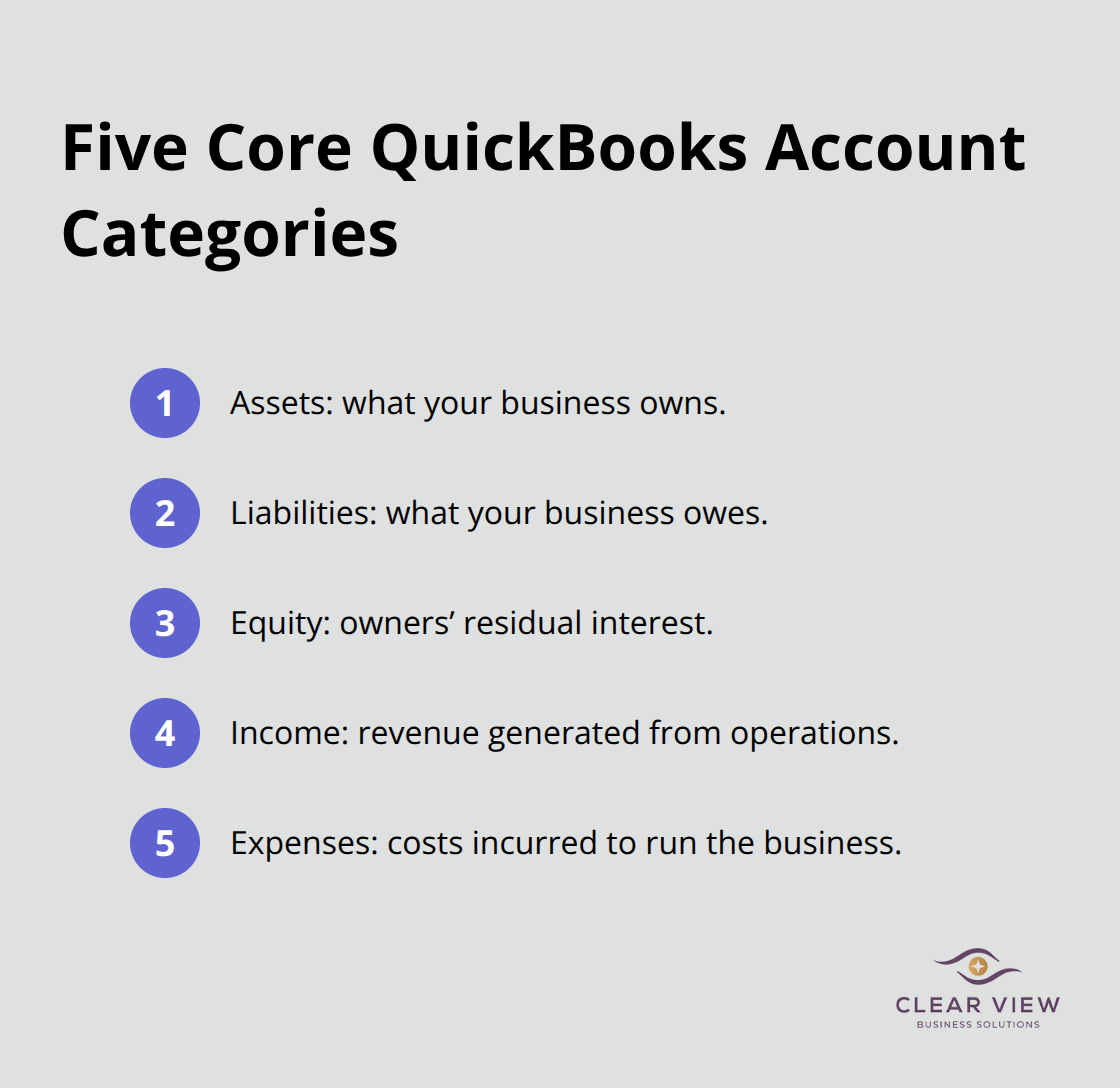
Start with the five account categories: assets, liabilities, equity, income, and expenses. Then add subcategories only when you genuinely need to track something separately for tax purposes or decision-making. If your accountant needs specific income or expense breakdowns for tax filing, ask them upfront which accounts to create. This prevents the chaos of reorganizing everything later.
Recording transactions correctly is where most Tucson business owners lose control of their finances. Many people record everything as a general expense instead of categorizing properly, which means you can’t answer basic questions like how much you actually spent on supplies versus equipment.
Set a rule: every transaction gets a specific category the moment you record it. Use QuickBooks’ split feature when a single invoice covers multiple categories. For example, if you buy office supplies and printer ink in one purchase, split that transaction so supplies and equipment are tracked separately. Reconcile your bank account monthly, not quarterly or annually.
Financial reports are only valuable if your underlying data is accurate. Once you record your transactions correctly, QuickBooks generates reports automatically. Your balance sheet shows what you own and owe, your profit and loss statement reveals whether you’re actually profitable, and your cash flow statement explains why profitable companies sometimes run out of money (a situation that catches many business owners off guard).
These three reports answer nearly every financial question a small business owner needs answered. With accurate data in place, you’re ready to move beyond the basics and start managing the operational side of your business more strategically.
Now that your fundamentals are solid, shift from basic bookkeeping to operational management. The difference between small business owners who stay stuck and those who scale is how they handle invoicing, inventory, and bank reconciliation. These three areas directly impact your cash flow, which is what actually keeps your business alive.
Most Tucson business owners make invoicing harder than it needs to be. Stop sending generic invoices through email and start using QuickBooks’ invoicing system. QuickBooks lets you set up automated reminders, which reduces the number of late-paying customers significantly. Set your invoice terms clearly-net 30 days is standard for most service businesses, but net 15 works better if cash flow is tight.
Create invoice templates for different client types so you’re not starting from scratch each time. Track which clients consistently pay late and adjust your terms with them before they become problems. If you offer discounts for early payment, QuickBooks calculates these automatically, which actually incentivizes clients to pay faster and improves your cash position immediately.
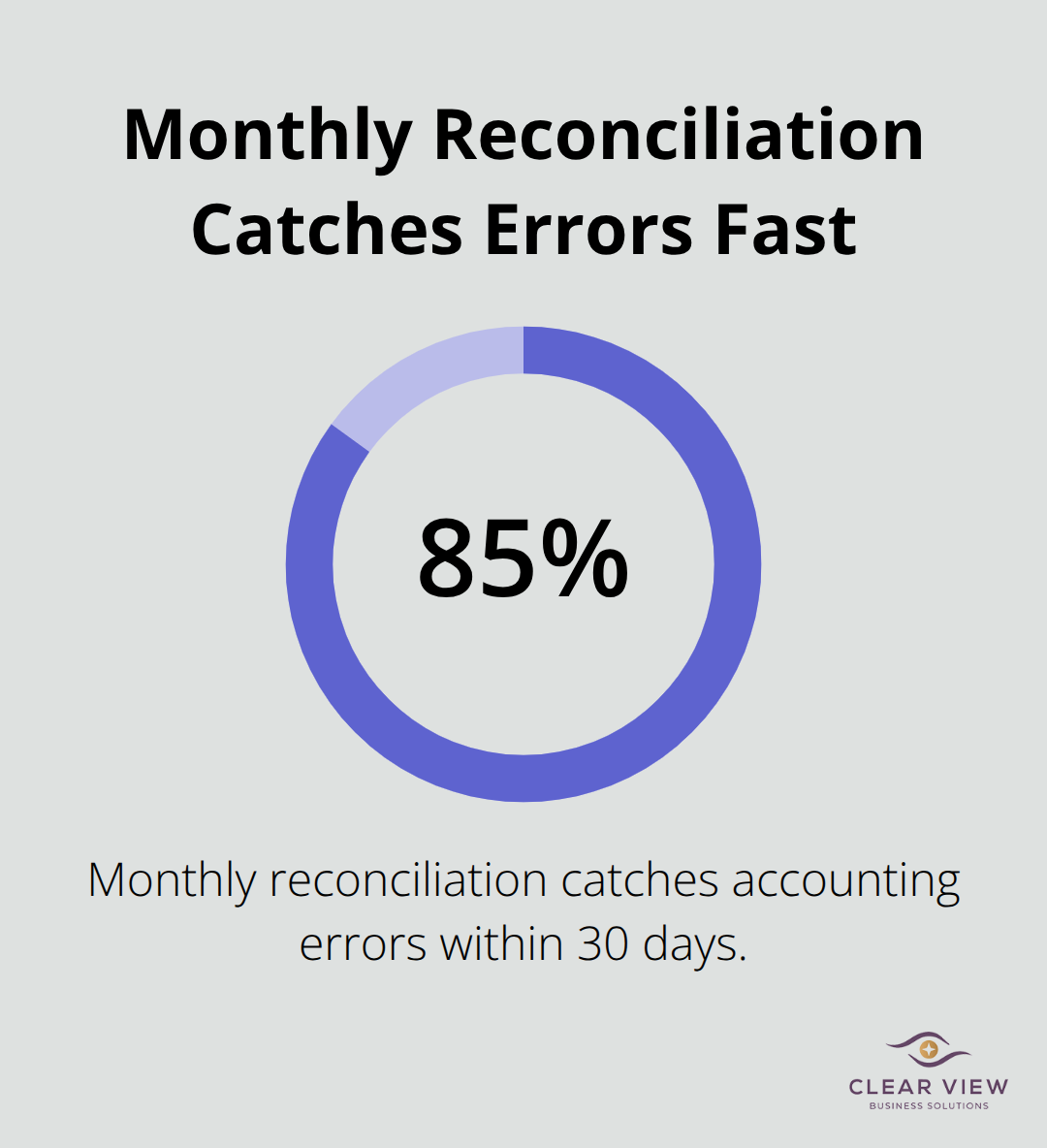
Reconciling your bank account monthly isn’t optional if you want to catch fraud or errors quickly. The Federal Deposit Insurance Corporation found that small businesses that reconcile monthly catch 85 percent of accounting errors within 30 days, while those reconciling quarterly miss problems that compound into bigger issues. Set a specific day each month-the 5th works well since most transactions clear by then-and spend 30 minutes matching your QuickBooks register against your bank statement.
Unreconciled transactions sit in limbo and create confusion about your actual available cash. This practice prevents costly mistakes that damage your financial accuracy over time.
If you track inventory, QuickBooks requires you to understand the cost of goods sold, which is the direct cost of products you sell. This is not the same as your total expenses. Many retailers and product-based businesses in Arizona skip this step and end up thinking they’re profitable when they’re actually losing money on every sale.
Set up inventory items in QuickBooks with the actual cost you paid for each product. When you sell something, QuickBooks automatically reduces your inventory count and records the cost. Run your inventory valuation report quarterly to verify your physical counts match what QuickBooks shows. If they don’t match, you’ve either got a tracking problem or inventory shrinkage you need to address.
The difference between knowing your true product costs and guessing is the difference between a sustainable business and one that fails within three years. Once you master these operational fundamentals, you’re ready to move into advanced territory where custom reporting and automation multiply your financial control.
At this stage, you’ve moved past basic bookkeeping and operational management. The real power of QuickBooks emerges when you stop accepting whatever reports it generates and start building custom reports that actually answer your business questions. Most Tucson business owners never reach this level because they assume QuickBooks’ standard reports are sufficient. They’re not.
Standard reports show you what happened last month. Custom reports let you spot trends, identify which products drain profitability, and see exactly where your cash goes. Start by identifying the three metrics that matter most to your business. If you’re a service company, that might be revenue per employee, billable hours versus administrative time, and customer acquisition cost. If you’re a retailer, focus on gross margin by product line, inventory turnover rates, and customer lifetime value.
QuickBooks lets you create custom reports that track these metrics monthly instead of waiting for your accountant to compile them. Set up these reports in your first week of advanced training and review them every Friday morning before you plan the following week. The discipline of reviewing actual numbers weekly changes how you make decisions.
Automation multiplies your control exponentially. Recurring transactions eliminate manual entry for expenses you pay the same way every month-rent, insurance, subscription services. Set these up once and QuickBooks handles them automatically, reducing data entry errors that plague businesses relying on manual processes.
This approach frees you from tedious data entry so you can focus on analyzing what the data actually means. The time you save from automation should go directly into reviewing reports and making better financial decisions, not into finding more tasks to fill your day.
Integration with your bank account through QuickBooks’ direct connection catches unauthorized transactions immediately and saves hours each month on reconciliation. If you use payment processors like Square or PayPal, connect them to QuickBooks so sales data flows automatically instead of requiring manual reconciliation.
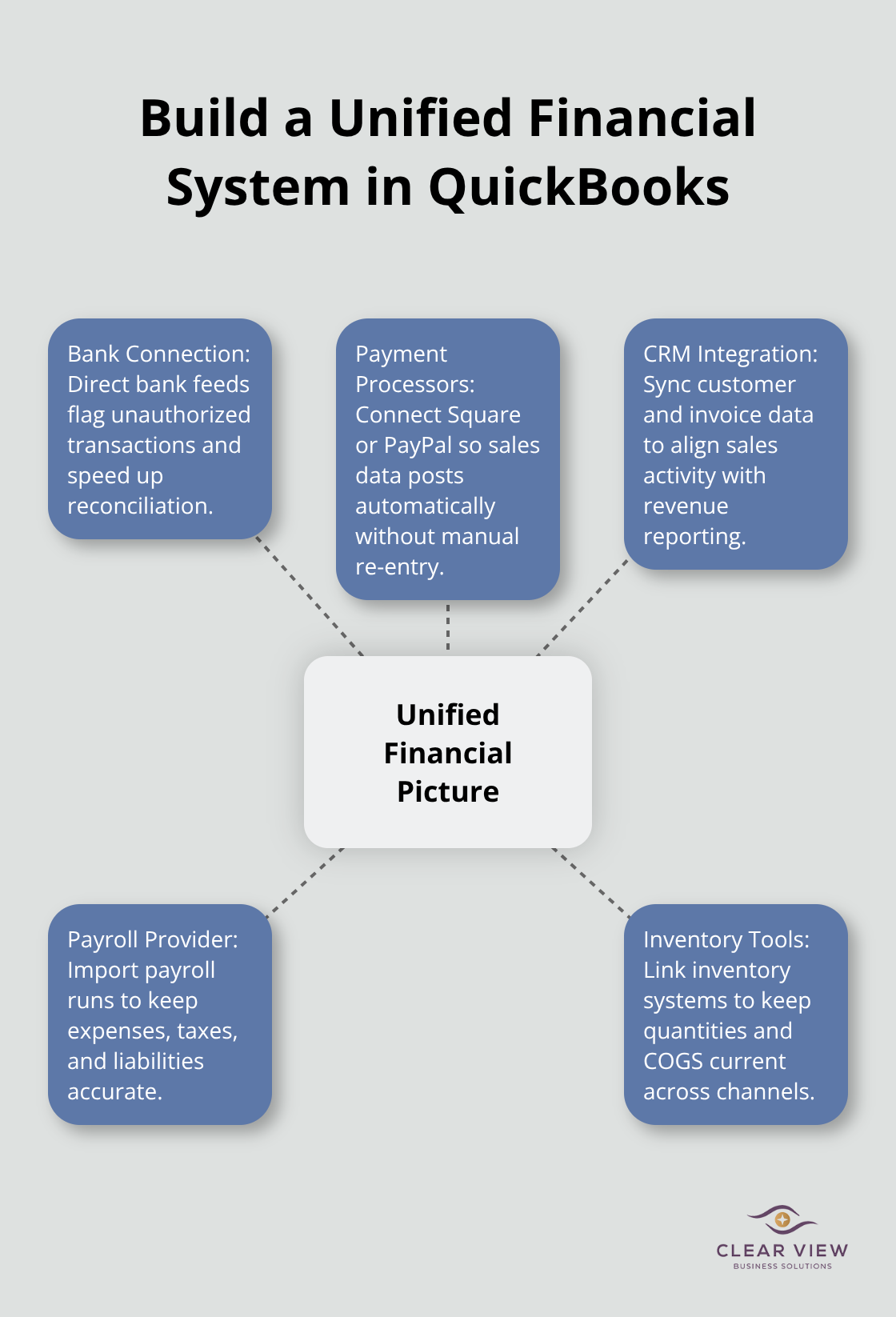
Connect QuickBooks to your CRM system if you use one, your payroll provider, and your inventory management tools. Each integration eliminates a handoff point where errors creep in. Many Tucson business owners resist automation because they fear losing control, but the opposite is true. Integration with multiple systems creates a unified financial picture that reveals problems faster than manual processes ever could.
You’ve now moved through QuickBooks from basic account setup to advanced automation and integration. Each level builds on the previous one, and skipping steps leaves you stuck in spreadsheet thinking instead of strategic financial management. The owners who pull ahead implement all three levels systematically and review their numbers weekly instead of waiting for quarterly surprises.
QuickBooks training near Tucson doesn’t require a classroom-the practical steps in this guide work whether you learn independently or with professional support. What matters is consistency: set up your chart of accounts correctly this week, reconcile your bank account next week, and build your first custom report the week after. Small, deliberate actions compound into complete financial control over three months.
We at Clear View Business Solutions work with Tucson business owners at every stage of this journey. Contact us to discuss how we can accelerate your path to financial control and help you make better decisions based on accurate data instead of guesswork.




At Clear View Business Solutions, we know you want your business to prosper without having to worry about whether you are paying more in taxes than you should or whether your business is set up correctly. The problem is it's hard to find a trusted advisor who can translate financial jargon to layman's terms and who can actually help you plan for better results.
We believe it doesn't have to be this way! No business owner should settle for working with a CPA firm that falls short of understanding what you want to achieve and how to help you get there.
Northwest Location:
7530 N. La Cholla Blvd., Tucson, AZ 85741
Central Location:
2933 N Campbell Avenue, Tucson, AZ 85719
© 2026 Clear View Business Solutions. All Rights Reserved.
At Clear View Business Solutions, we know you want your business to prosper without having to worry about whether you are paying more in taxes than you should or whether your business is set up correctly. The problem is it's hard to find a trusted advisor who can translate financial jargon to layman's terms and who can actually help you plan for better results.
We believe it doesn't have to be this way! No business owner should settle for working with a CPA firm that falls short of understanding what you want to achieve and how to help you get there. With over 20 years of experience serving hundreds of business owners like you, our team of experts combines financial expertise and proactive communication with our drive to help each client achieve results and have fun along the way.
Here's how we do it:
Discover: We start with a consultation to understand your specific goals, what's holding you back, and what success looks like for you.
Strategize & Optimize: Together, we design a customized strategy that empowers you to progress toward your goals, and we optimize our communication as partners.
Thrive: You enjoy a clear view of your business and your financial prosperity.
Schedule a consultation today, and take the first step toward being able to focus on your core business again without wondering if your numbers are right- or what they mean to your business.
In the meantime, download, "The Business Owner's Essential Guide to Tax Deductions" and make sure you aren't leaving money on the table.