


Most startups fail because of cash problems, not bad ideas. We at Clear View Business Solutions know that financial planning for startups separates the businesses that survive from those that don’t.
This guide walks you through the practical steps to build a financial foundation that actually works. From managing cash flow to handling taxes and setting up the right systems, you’ll learn what matters most.
Cash flow problems kill startups faster than bad products ever will. Cash flow issues can result from a lack of funding, poor budgeting, or inventory management issues. The difference between profit and cash trips up most founders. You can be profitable on paper while your bank account sits empty because customers haven’t paid invoices or inventory has tied up cash that could cover payroll.
Start by projecting what money actually enters and leaves your business each month, not what you hope will happen. Most founders guess instead of researching. Look at your historical data if you have it, or research what similar businesses in your industry experience. If you’re selling software, typical payment cycles run 30 to 90 days after invoicing. If you’re in retail, cash comes immediately but supplier payments might stretch 60 days.
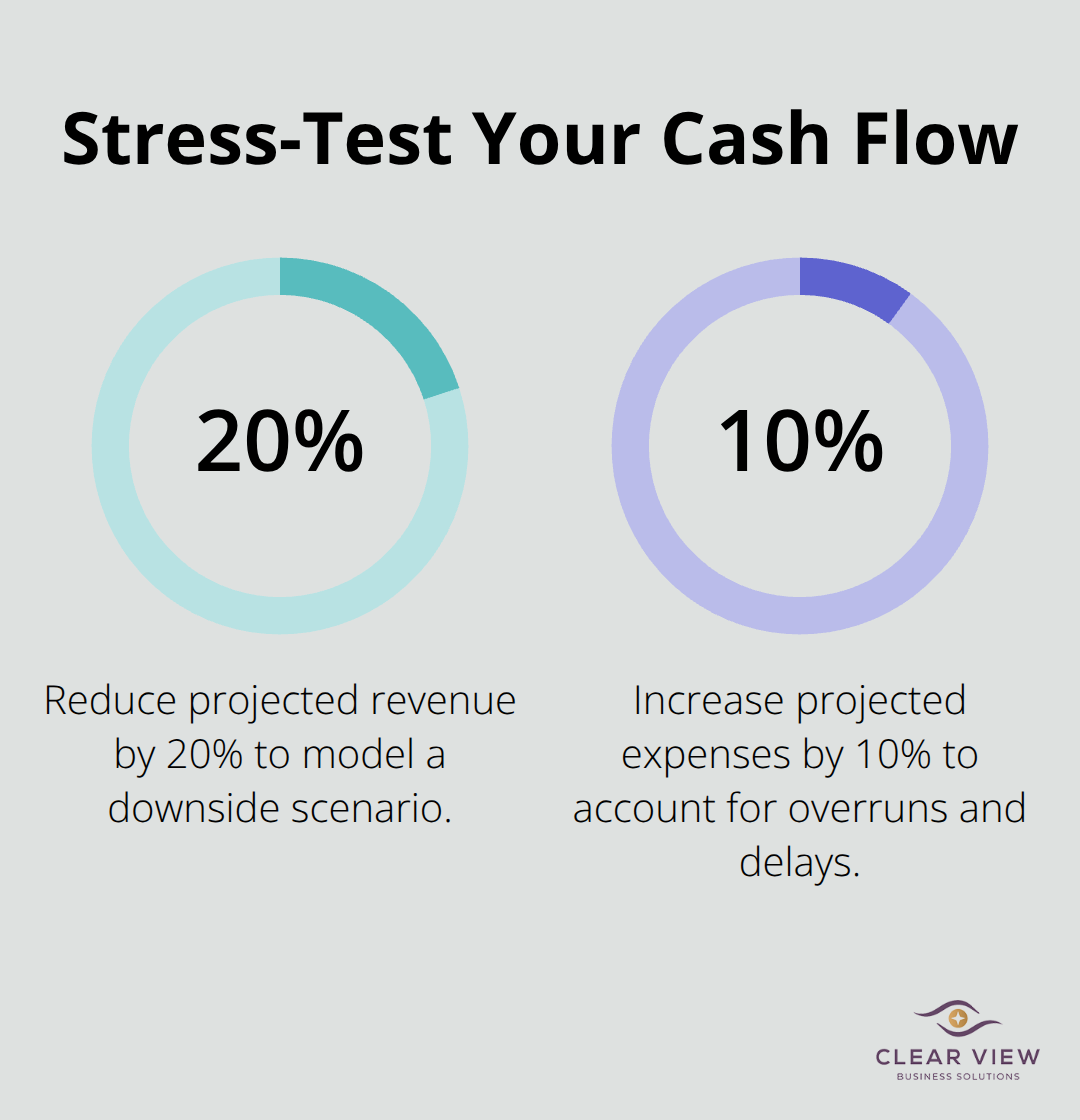
The gap between when you pay for something and when you receive payment is where startups get stuck. Create a 12-month cash flow projection using your best estimates, then stress-test it by reducing revenue projections by 20% and increasing expenses by 10%. This worst-case scenario shows you how many months your business survives if things go wrong.
Your burn rate-how much cash you spend monthly-determines your runway, which is how long you can operate before running dry. If you spend $15,000 monthly and have $90,000 in the bank, your runway is six months. That’s not comfortable. Try for at least nine months of runway at your current burn rate, or aggressively cut expenses and accelerate revenue.
Most startups need about 6 to 12 months of operating expenses in reserve to weather slowdowns, unexpected costs, or payment delays. This buffer separates businesses that survive temporary setbacks from those that collapse under pressure.
The most practical move is building a cash reserve that covers three to six months of fixed costs (rent, salaries, and insurance). Variable costs like inventory fluctuate, but your fixed costs won’t disappear when revenue dips. Start setting aside cash for this reserve immediately, even if it means slower growth, because growth without cash leads to insolvency.
With your cash flow picture clear and a reserve strategy in place, you’re ready to address the tax obligations that come with running a startup.
Most startup founders postpone tax planning until April, which costs them thousands in missed deductions and penalties. We see this repeatedly-businesses that wait until tax season discover they’ve lost opportunities to save money throughout the year. The IRS doesn’t care about your excuse. Federal self-employment tax reaches 15.3% on net profit, and depending on your state, you’ll owe income tax, sales tax, and potentially employment taxes. Starting tax planning on day one isn’t optional; it’s the difference between keeping cash in your business and handing it to the government.
Your first move is understanding what taxes actually apply to you. Sole proprietors report business income on Schedule C and pay self-employment tax on roughly 92.35% of net profit. An LLC taxed as an S-corporation can reduce self-employment taxes significantly-often by 20% to 40%-because you only pay self-employment tax on W-2 wages you pay yourself, not all profits. C-corporations face double taxation but offer liability protection. The right structure depends on your specific situation, not generic advice.
If you’re making $60,000 in profit as a sole proprietor, you owe approximately $8,478 in self-employment tax alone. Switch to an S-corporation and pay yourself a reasonable salary of $40,000, and your self-employment tax drops to roughly $5,654. That’s $2,824 back in your pocket annually. The IRS scrutinizes S-corp elections, so document that your salary is reasonable for your industry and role.
Quarterly estimated tax payments prevent penalties and interest charges-missing these costs you an extra 5% to 20% depending on how late you file.
Deductions are where founders leave money on the table. Home office deductions run $5 per square foot up to 300 square feet annually, meaning a 200-square-foot dedicated office generates $1,000 in deductions. Vehicle expenses, supplies, software subscriptions, professional services, and equipment all qualify. Keep receipts and document the business purpose-the IRS requires this.
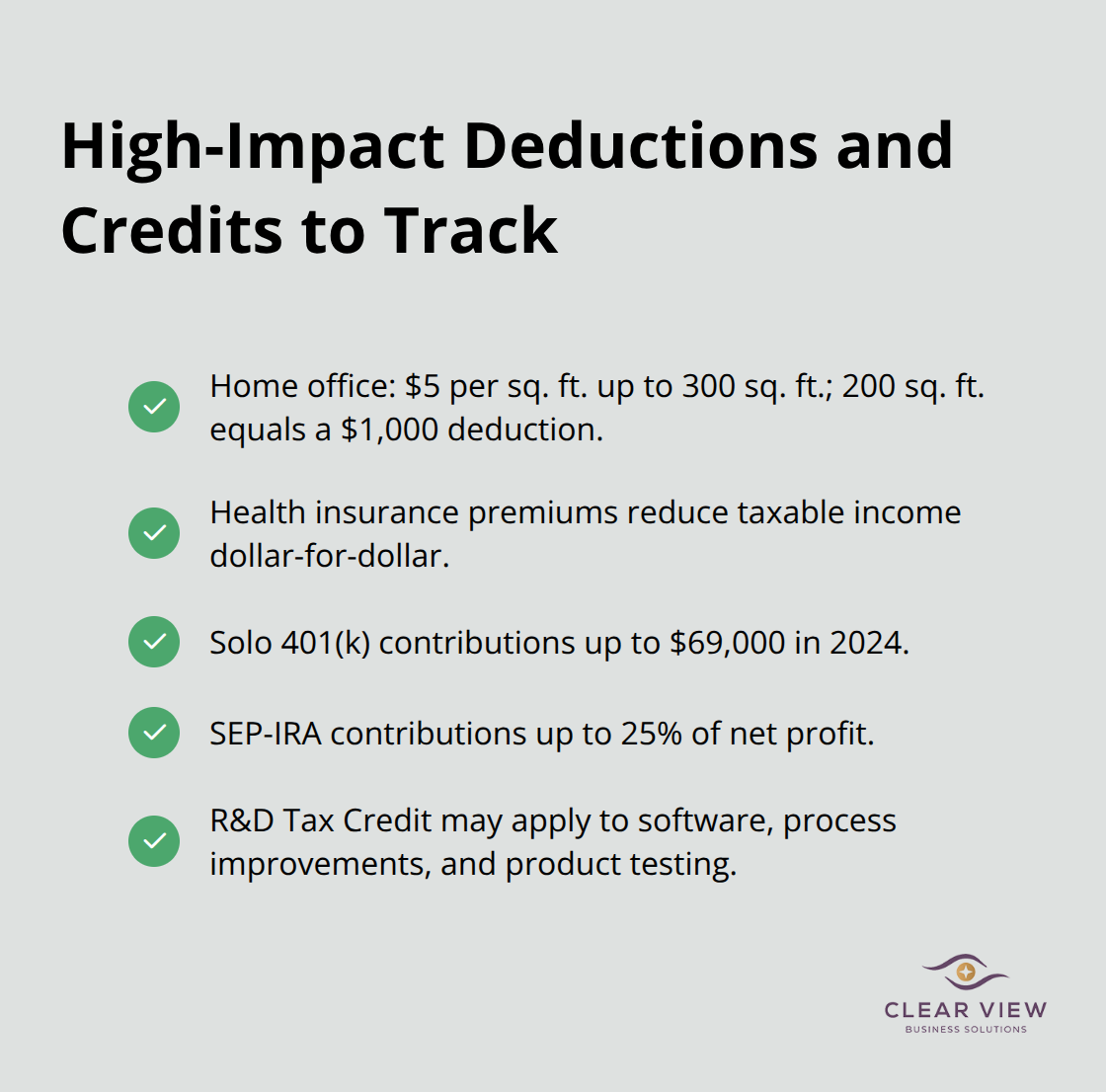
Health insurance premiums for self-employed individuals reduce taxable income dollar-for-dollar. Retirement contributions matter too: a Solo 401k lets you contribute up to $69,000 annually (as of 2024), while a SEP-IRA allows up to 25% of net profit. These reduce your taxable income today and build retirement savings simultaneously.
Many startups miss the Research and Development Tax Credit. If you’re developing software, improving processes, or testing new products, you likely qualify. The credit requires specific documentation and IRS forms, so working with a professional on this makes sense.
Sales tax compliance trips up online sellers and service providers constantly. If you ship products to states where you have nexus (physical presence, employees, or significant economic activity), you owe sales tax in those states. As of 2024, most states require collection and remittance even for online sales. The threshold varies by state; some require filing once you hit $100,000 in sales, others have no threshold. Missing this creates back-tax liability plus penalties that can exceed 10% annually.
Payroll taxes apply once you hire employees. You withhold federal income tax, Social Security, and Medicare from wages, match the employee’s Social Security and Medicare contributions, and pay federal unemployment tax. Quarterly filings to the IRS and state are mandatory. Misclassifying employees as contractors to avoid these costs triggers IRS audits and penalties exceeding 100% of unpaid taxes.
Document everything systematically from day one. Use accounting software like QuickBooks or FreshBooks to categorize income and expenses automatically. Clean records make tax preparation faster and cheaper, reduce audit risk, and provide clarity on profitability. Many founders track finances haphazardly on spreadsheets, then spend thousands on accountant fees sorting it out. Organized records from the start prevent this waste.
Consider working with a tax professional who understands startups-they identify deductions you’d miss and structure your business for tax efficiency. With your tax foundation solid and your business structure optimized, you’re ready to implement the accounting systems and financial tools that transform raw data into actionable insights.
Most startup founders waste money on accounting software they don’t use or hire accountants too late to prevent costly mistakes. The reality is simpler: you need systems that match your current stage, not enterprise-level tools designed for companies with hundreds of employees. Start with QuickBooks Online or FreshBooks because they automate categorization, generate profit-and-loss statements automatically, and connect directly to your bank account. Both cost between $15 and $50 monthly depending on features. The automation saves you roughly five to ten hours monthly compared to manual spreadsheet tracking, which translates to $500 to $1,500 in reclaimed time annually at typical startup founder hourly rates.

Set up your chart of accounts correctly from day one-this takes two hours but prevents the nightmare of reclassifying transactions later when you need accurate financial data. Technology matters less than discipline: a founder who uses a $30 monthly accounting tool consistently beats one with expensive software that sits unused. Most startups fail at financial tracking because they treat it as a quarterly chore instead of a weekly habit.
Hiring an accountant before you need one costs money upfront but saves far more later. Most startup founders contact accountants in March when taxes are due, missing opportunities to structure the business for tax efficiency or identify deductions throughout the year. A good accountant costs $1,500 to $3,000 annually for basic bookkeeping and tax prep, but catches deductions worth $5,000 to $15,000 that you’d miss alone. If you’re generating revenue above $50,000 annually, this hire pays for itself immediately.
Start the conversation in your first quarter, not your last one. Ask potential accountants specifically about startup experience and whether they understand your industry-generic advice costs you money. For specialized needs like S-corporation elections, R&D tax credits, or complex multi-state sales tax, you need someone who focuses on startups, not a generalist handling everything from divorce proceedings to estate planning.
Spend 30 minutes weekly reviewing transactions, categorizing expenses, and checking your cash balance. This rhythm catches problems before they become crises and keeps your financial picture accurate for real decision-making. The discipline of weekly review matters more than the tool you select (whether that’s QuickBooks, FreshBooks, or another platform). Founders who establish this habit early maintain control over their finances instead of discovering problems months later when damage has already occurred.
Financial planning for startups isn’t something you handle once and forget-it’s the ongoing work that determines whether your business survives its first five years or joins the 20% of startups that fail within two years due to cash problems. Accurate cash flow projections prevent the surprise of an empty bank account, tax planning from day one keeps thousands in your pocket instead of the government’s, and organized accounting systems give you real visibility into profitability. Start this week by setting up your accounting software, creating a 12-month cash flow projection with a 20% revenue reduction built in, and identifying your tax obligations based on your business structure.
Professional support accelerates your progress significantly. You don’t need a full-time CFO, but you do need someone who understands startup finances and your specific industry-we at Clear View Business Solutions work with startups in Tucson to handle tax planning, bookkeeping, and compliance so you can focus on building your business. The cost of professional guidance pays for itself through deductions you’d otherwise miss and tax structures that reduce what you owe.
Your financial foundation determines your growth ceiling. Startups with clean records, accurate projections, and tax-efficient structures scale faster because they understand their numbers and make decisions based on reality, not guesses.




At Clear View Business Solutions, we know you want your business to prosper without having to worry about whether you are paying more in taxes than you should or whether your business is set up correctly. The problem is it's hard to find a trusted advisor who can translate financial jargon to layman's terms and who can actually help you plan for better results.
We believe it doesn't have to be this way! No business owner should settle for working with a CPA firm that falls short of understanding what you want to achieve and how to help you get there.
Northwest Location:
7530 N. La Cholla Blvd., Tucson, AZ 85741
Central Location:
2933 N Campbell Avenue, Tucson, AZ 85719
© 2026 Clear View Business Solutions. All Rights Reserved.
At Clear View Business Solutions, we know you want your business to prosper without having to worry about whether you are paying more in taxes than you should or whether your business is set up correctly. The problem is it's hard to find a trusted advisor who can translate financial jargon to layman's terms and who can actually help you plan for better results.
We believe it doesn't have to be this way! No business owner should settle for working with a CPA firm that falls short of understanding what you want to achieve and how to help you get there. With over 20 years of experience serving hundreds of business owners like you, our team of experts combines financial expertise and proactive communication with our drive to help each client achieve results and have fun along the way.
Here's how we do it:
Discover: We start with a consultation to understand your specific goals, what's holding you back, and what success looks like for you.
Strategize & Optimize: Together, we design a customized strategy that empowers you to progress toward your goals, and we optimize our communication as partners.
Thrive: You enjoy a clear view of your business and your financial prosperity.
Schedule a consultation today, and take the first step toward being able to focus on your core business again without wondering if your numbers are right- or what they mean to your business.
In the meantime, download, "The Business Owner's Essential Guide to Tax Deductions" and make sure you aren't leaving money on the table.