

Nonprofits in Tucson operate on tight margins, and one wrong financial decision can derail your mission. Revenue fluctuates, costs climb, and compliance demands pile up-all while you’re trying to serve your community.
At Clear View Business Solutions, we’ve seen how nonprofits struggle with nonprofit financial planning in Tucson when they lack a solid budget framework. The good news is that sustainable financial planning isn’t complicated-it just requires the right approach and tools.
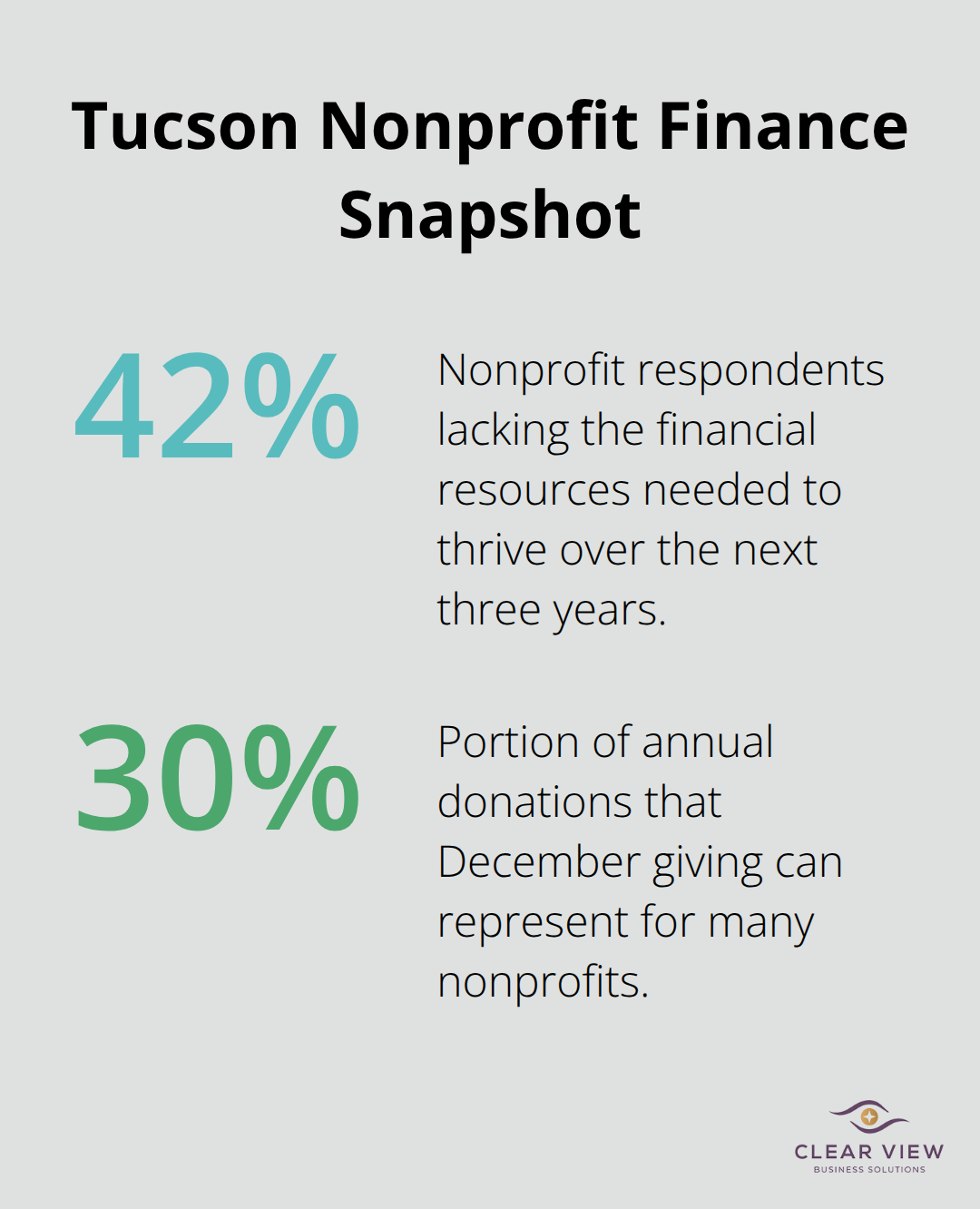
Nonprofits in Tucson face three interconnected financial pressures that most leaders underestimate until they hit cash flow problems. First, donation patterns are wildly unpredictable. Seasonal giving creates massive swings between December surges and January droughts. According to the Nonprofit Finance Fund’s 2013 State of the Sector report, about one in four nonprofits has 30 days or less cash-on-hand, which means a single missed grant payment or unexpected donor silence can force difficult choices about payroll or program delivery. Second, operational costs keep climbing while funding stays flat. Staff salaries, facility maintenance, insurance, and technology subscriptions don’t pause when donations drop, yet most grants specifically restrict funding to programs, leaving nonprofits to cover overhead from their shrinking general fund. The Nonprofit Finance Fund also found that 42 percent of nonprofit respondents lacked the right financial resources to thrive over the next three years, largely because grants underfund the infrastructure needed to run stable organizations. Third, compliance demands are relentless and expensive.
Nonprofits must file Form 990s with the IRS, meet state reporting requirements, track restricted funds separately, and prepare for potential audits-all while lacking dedicated finance staff. Many Tucson nonprofits treat compliance as an afterthought until an audit reveals missing documentation or misallocated funds, which damages donor confidence and can jeopardize tax-exempt status.
Donation volatility kills nonprofit budgets. Major donors retire, relocate, or shift priorities without warning. Government grants come with strict timelines and often require quarterly reporting that consumes staff hours. Foundation grants are competitive and unpredictable, with acceptance rates sometimes below 10 percent. The real problem is that nonprofits budget as though last year’s revenue will repeat this year, then scramble when it doesn’t. A Tucson nonprofit that received $50,000 from a corporate sponsor one year cannot assume that money will return. Yet many organizations commit to ongoing programs based on single-year grants, creating a false sense of stability. A realistic budget tracks which revenue sources are stable, which fluctuate seasonally, and which are one-time windfalls-then plans accordingly.
Nonprofits are caught between mission and money. Program staff need supplies, space, and technology to serve clients, but those costs compete with the administrative infrastructure required to manage the organization. Accounting software costs money. Bookkeeping requires skilled staff. Grant compliance takes hours. Yet donors often resist funding overhead, viewing it as waste rather than necessity. This pressure forces nonprofits to underfund the systems that keep them running, which leads to poor financial controls, missed compliance deadlines, and eventually, operational crisis. Tucson nonprofits must accept that strong administration is not a luxury-it’s the foundation that allows programs to function at all.
Form 990 preparation, state filings, and audit readiness demand time and expertise that most nonprofits lack in-house. A single compliance mistake can trigger penalties, damage relationships with grantmakers, or expose the organization to legal liability. Many Tucson nonprofits discover too late that their bookkeeping systems don’t separate restricted funds from general operating funds, making it impossible to prove grant compliance during an audit. The cost of fixing these problems after the fact (hiring an accountant to reconstruct records, paying audit fees, or addressing IRS inquiries) far exceeds the cost of building proper systems upfront. Nonprofits that invest in solid accounting infrastructure and professional guidance avoid these expensive surprises.
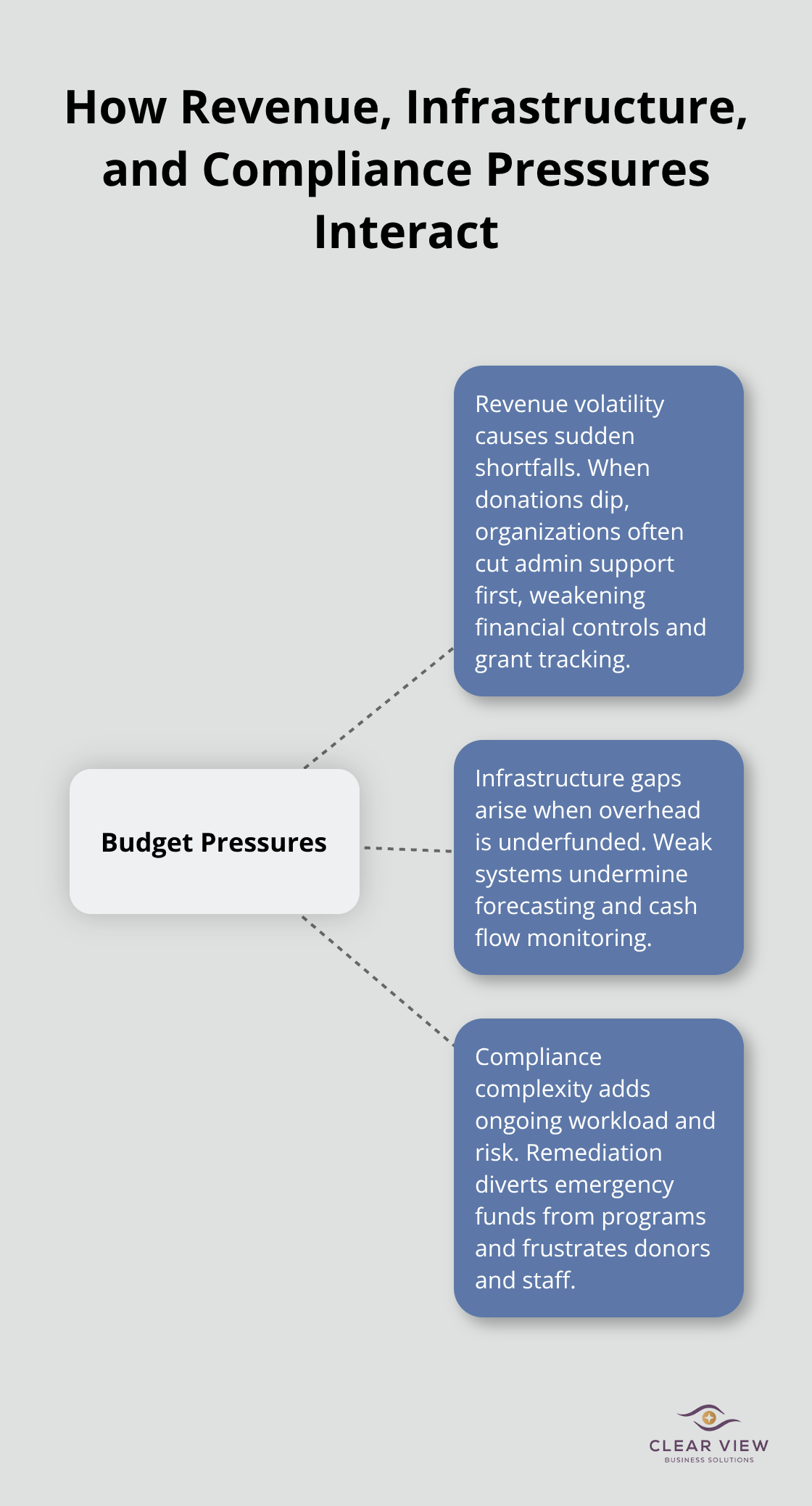
Revenue volatility, infrastructure gaps, and compliance complexity don’t exist in isolation-they feed each other. When donations drop, nonprofits cut administrative costs first, which weakens the very systems needed to track grants and maintain compliance. When grants underfund overhead, nonprofits lack the staff to forecast revenue accurately or monitor cash flow, which makes them vulnerable to the next donation drought. When compliance problems emerge, nonprofits spend emergency funds on remediation instead of programs, which frustrates donors and staff alike.
Breaking this cycle requires a budget framework that acknowledges all three pressures and addresses them together.
The difference between a budget that works and one that fails comes down to honesty about what money will actually arrive. Most Tucson nonprofits construct budgets by adding up last year’s revenue and hoping for growth, then panic when donations underperform or grants delay. A sustainable budget starts with segregating revenue into three categories: stable income that arrives predictably, cyclical income that fluctuates by season or grant cycle, and aspirational income that you hope for but cannot count on.
Stable income includes monthly donors, membership fees, and long-term contracts with consistent payers. Cyclical income includes year-end giving spikes, foundation grant cycles that cluster in spring, and government contracts that renew annually. Aspirational income is everything else-the major gift you’re pursuing, the new corporate sponsor you’re courting, or the special event you plan to launch.
Many nonprofits report that they have less than three months of operating reserves on hand, which means revenue timing matters as much as total revenue. A nonprofit that receives half its annual funding in December faces months of cash shortfalls unless it builds reserves or staggers its spending. Forecast each revenue source by month, not just by year total. If your largest grant arrives in April, structure your cash flow to cover January through March with reserves or lower spending. If December giving typically accounts for 30 percent of annual donations, budget conservatively from January through November and adjust upward only when December money lands in the bank.
Separate your operating budget into program expenses that directly serve clients and administrative expenses that keep the organization running. This separation matters because grants almost always restrict funding to programs, yet administration costs-accounting software, board insurance, facilities management, compliance staff-do not disappear. The Nonprofit Finance Fund found that grants underfund infrastructure, leaving nonprofits to cover overhead from shrinking general operating funds.
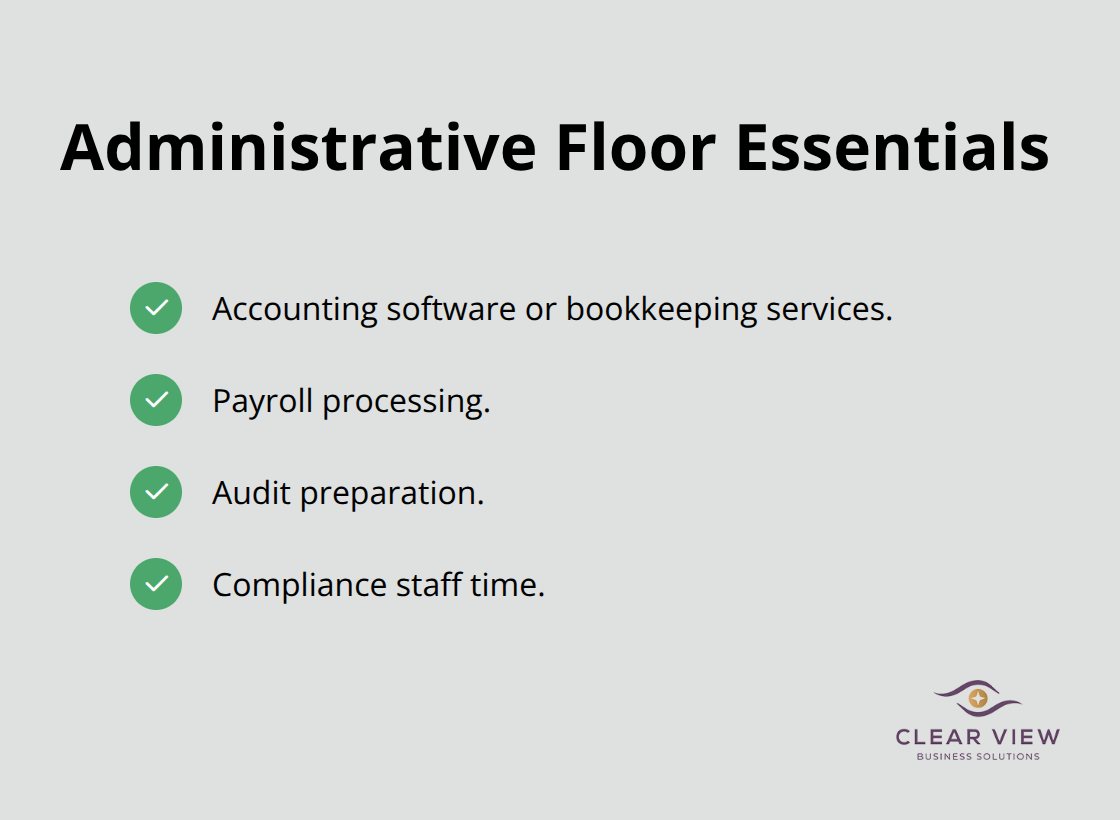
Many Tucson nonprofits treat administrative costs as optional or discretionary, then slash them during revenue shortfalls, which weakens the systems needed to track grants and maintain compliance. Instead, identify your true administrative floor-the minimum spending required to maintain financial controls, meet compliance deadlines, and manage grants properly. This floor typically includes accounting software or bookkeeping services, payroll processing, audit preparation, and compliance staff time.
Once you know this floor, protect it from cuts. Fund it first from general operating support or unrestricted donations, not from program grants. If your administrative floor exceeds available unrestricted revenue, you have a structural problem that requires either securing general operating support grants or raising more unrestricted donations. Do not solve this problem by underfunding administration, because the cost of fixing compliance failures or financial control breakdowns will be far higher than the cost of maintaining proper systems upfront.
Contingency planning separates organizations that weather financial storms from those that collapse under them. Most nonprofits lack contingency budgets entirely, operating on the assumption that revenue will arrive on schedule and unexpected expenses won’t occur. This assumption is wrong.
A realistic contingency plan identifies three scenarios: a best-case scenario where revenue meets projections, a base-case scenario where revenue falls 10 to 15 percent short, and a worst-case scenario where a major funder withdraws or a grant is delayed by three months. For each scenario, specify which programs you can reduce, which staff positions you protect, and which expenses remain truly fixed. Then build a contingency reserve equal to at least 30 days of operating expenses, ideally 60 days. This reserve absorbs revenue shortfalls or unexpected costs without forcing emergency cuts to programs or staff.
Many Tucson nonprofits resist building reserves because donors view them as hoarding, yet reserves are the difference between an organization that survives a funding gap and one that collapses. Communicate to donors that reserves enable long-term stability and allow the nonprofit to weather temporary funding disruptions without cutting services. Document your contingency plan in writing, review it quarterly with your board and finance team, and update it whenever a major revenue source changes or a significant expense emerges. If a grant is delayed by two months, your contingency plan tells you immediately whether you can cover payroll from reserves or must implement spending reductions. This clarity prevents panic decisions that damage relationships with staff and donors.
The financial tools and systems you choose determine whether your budget framework actually functions or remains theoretical. Accounting software, grant tracking platforms, and professional advisory services transform a budget from a static document into a living management tool that guides monthly decisions and alerts you to problems before they become crises.
Accounting software is not optional for Tucson nonprofits serious about financial stability. Most organizations that struggle with compliance problems, grant tracking failures, or cash flow surprises still use spreadsheets or paper records. Spreadsheets create hidden errors, make audit preparation a nightmare, and prevent real-time visibility into restricted funds versus general operating money. Cloud-based accounting software like Aplos or specialized nonprofit platforms track every dollar in real time, automatically categorize expenses by program and grant, and generate reports that show exactly where money came from and where it went.
The cost typically ranges from $50 to $300 per month depending on complexity, which is far cheaper than hiring a part-time bookkeeper or paying accountants to reconstruct records during an audit. More importantly, accounting software eliminates the mental burden of manual tracking and frees your finance team to focus on forecasting and strategy rather than data entry. Set up your accounting system to separate restricted funds from general operating funds from day one, because mixing these categories creates compliance nightmares and makes it impossible to prove to auditors that you spent grant money correctly.
Grant management platforms and professional financial advisory services complete the picture. Platforms like Grants.gov and GrantStation help Tucson nonprofits track deadlines, organize application requirements, and monitor funding timelines so grants do not slip through the cracks or arrive late and damage cash flow forecasts. These platforms prevent the common mistake of missing submission deadlines or failing to submit required reports on time, which can disqualify your organization from future funding.
However, software alone cannot fix structural budget problems or help your board understand what the numbers actually mean. Your finance team needs tools that alert them to cash flow problems before they become emergencies, not systems that simply record transactions after they occur.
A qualified nonprofit accountant costs between $2,000 and $5,000 annually but prevents problems that cost far more to fix after they occur. Professional advisors help Tucson organizations build realistic budgets, forecast revenue accurately, and set up financial controls that prevent costly mistakes. They identify whether your administrative costs are truly protected from budget cuts, whether your contingency reserves are adequate, and whether your revenue forecasts match actual donor behavior and grant cycles.
The right combination of accounting software, grant tracking platforms, and professional guidance transforms your budget from a document nobody reads into a management system that actually guides decisions and protects your mission. Your finance team gains confidence in the numbers, your board makes better decisions, and your organization survives revenue swings that would otherwise force emergency cuts to programs or staff.
Sustainable nonprofit financial planning in Tucson rests on three concrete actions that address the root causes of financial stress. Separate your revenue into stable, cyclical, and aspirational categories so you budget based on what will actually arrive rather than what you hope for. Protect your administrative floor by identifying the minimum spending required to maintain financial controls and compliance, then fund it from unrestricted sources before allocating program grants. Build a contingency reserve equal to at least 30 days of operating expenses and document your response plan for revenue shortfalls so your board and finance team act decisively when funding gaps occur.
Organizations that implement these steps gain immediate benefits across operations and morale. Your finance team stops scrambling through spreadsheets and starts forecasting cash flow accurately, your board makes decisions based on real numbers rather than assumptions, and your staff gains confidence that payroll will arrive on time even when donations dip. Most importantly, your organization survives revenue swings that would otherwise force emergency cuts to programs or staff, which means you redirect energy toward mission instead of financial firefighting.
Getting started requires professional guidance tailored to your organization’s specific situation. Clear View Business Solutions provides comprehensive financial advisory and bookkeeping services for Tucson nonprofits, helping organizations build realistic budgets, set up accounting systems that separate restricted funds properly, and establish financial controls that prevent costly compliance mistakes. Contact Clear View Business Solutions to schedule a consultation and begin building the financial foundation your nonprofit needs to thrive.




At Clear View Business Solutions, we know you want your business to prosper without having to worry about whether you are paying more in taxes than you should or whether your business is set up correctly. The problem is it's hard to find a trusted advisor who can translate financial jargon to layman's terms and who can actually help you plan for better results.
We believe it doesn't have to be this way! No business owner should settle for working with a CPA firm that falls short of understanding what you want to achieve and how to help you get there.
Northwest Location:
7530 N. La Cholla Blvd., Tucson, AZ 85741
Central Location:
2933 N Campbell Avenue, Tucson, AZ 85719
© 2026 Clear View Business Solutions. All Rights Reserved.
At Clear View Business Solutions, we know you want your business to prosper without having to worry about whether you are paying more in taxes than you should or whether your business is set up correctly. The problem is it's hard to find a trusted advisor who can translate financial jargon to layman's terms and who can actually help you plan for better results.
We believe it doesn't have to be this way! No business owner should settle for working with a CPA firm that falls short of understanding what you want to achieve and how to help you get there. With over 20 years of experience serving hundreds of business owners like you, our team of experts combines financial expertise and proactive communication with our drive to help each client achieve results and have fun along the way.
Here's how we do it:
Discover: We start with a consultation to understand your specific goals, what's holding you back, and what success looks like for you.
Strategize & Optimize: Together, we design a customized strategy that empowers you to progress toward your goals, and we optimize our communication as partners.
Thrive: You enjoy a clear view of your business and your financial prosperity.
Schedule a consultation today, and take the first step toward being able to focus on your core business again without wondering if your numbers are right- or what they mean to your business.
In the meantime, download, "The Business Owner's Essential Guide to Tax Deductions" and make sure you aren't leaving money on the table.