


Nonprofits in Tucson face unique tax challenges that most organizations don’t fully understand. The difference between proper planning and missed opportunities can mean thousands of dollars in savings or unnecessary compliance headaches.
We at Clear View Business Solutions help nonprofits navigate nonprofit tax planning in Tucson with practical strategies that actually work. This guide covers the specific deductions, filing requirements, and giving structures that protect your organization’s tax-exempt status while maximizing financial efficiency.
The IRS requires most tax-exempt nonprofits to file Form 990 annually, and this isn’t optional. What matters more than the filing itself is how you structure your accounting system before you file. The IRS uses specific revenue and expense classifications-donations, salaries, postage, rent-to determine whether your organization maintains tax-exempt status. If your accounting doesn’t align with these categories, you’ll either miss deductions or face compliance issues that trigger audits.
To obtain or maintain 501(c)(3) status, you need startup documents including Articles of Incorporation with Exempt Purpose, an Employer Identification Number, bylaws, and minutes of board meetings. Religious organizations with dual status must document pastoral housing allowances and other ministerial benefits separately. Startups should provide documentation of organizational mission, descriptions of activities and programs, and financial support documentation detailing revenue sources.
You’ll also need revenue and expense statements for the last four years or as far back as possible to demonstrate financial history. Form 990 includes an Income Statement, Balance Sheet, Functional Expense Statement, Individual Program Expense Statement, and Revenue Support Schedules-each designed to show the IRS exactly how your money flows.
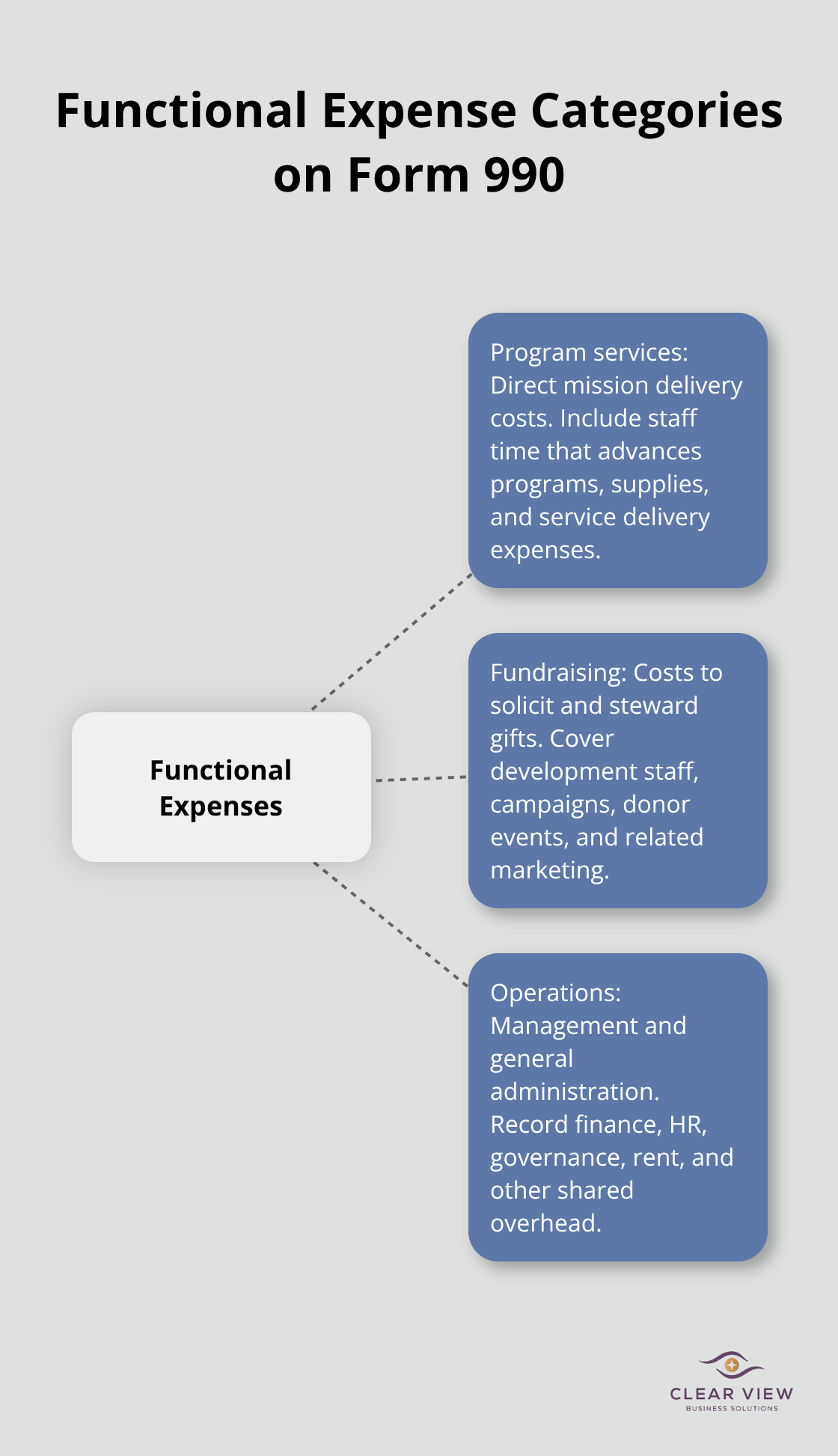
The Functional Expense Statement allocates expenses to program services, fundraising, or operations. Nonprofits that structure this incorrectly often appear to spend too much on overhead, which damages donor confidence and grant eligibility even when the actual percentages are reasonable.
Arizona adds another layer of complexity that most Tucson nonprofits overlook. Arizona does not offer a blanket nonprofit exemption from transaction privilege tax, meaning your organization may owe TPT on purchases unless a specific statutory exemption applies. When a nonprofit acts as a customer-buying hotel rooms for conferences, renting equipment, purchasing meals for events-vendors typically pass TPT to you unless you have explicit exemption documentation.
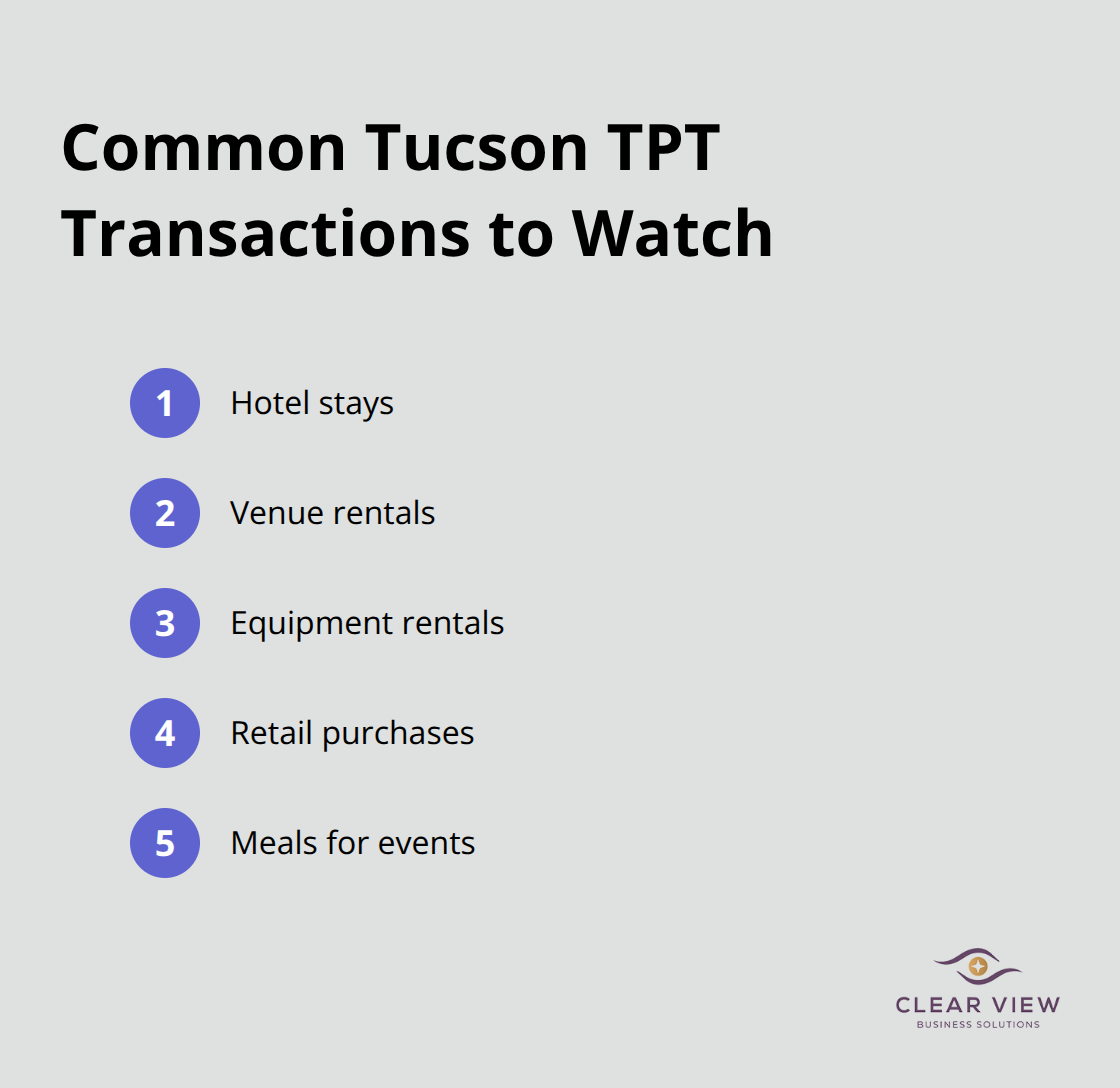
Cities in Tucson generally provide broader exemptions than the state, but important exceptions exist. Some 501(c)(7) through 501(c)(9) clubs with more than 15 percent nonmember gross revenue face full taxation on gross income. Common transactions likely subject to TPT include hotel stays, venue rentals, equipment rentals, retail purchases, and meals.
Whether you need an exemption letter from the Arizona Department of Revenue depends on your specific nonprofit type. Certain 501(c)(3) groups that regularly serve meals to the needy at no cost or provide qualifying housing subsidies don’t require one. Others like qualifying hospitals, health care organizations, and rehabilitation programs must apply.
The Arizona TPT procedure TPP 00-4 provides an overview of exemptions for tax-exempt organizations engaged in business. Coordinate with vendors to ensure correct tax handling and keep exemption documentation when applicable. This distinction between acting as a customer versus operating as a business determines your entire tax treatment locally, which directly affects how you plan your operational expenses and budget for the year ahead.
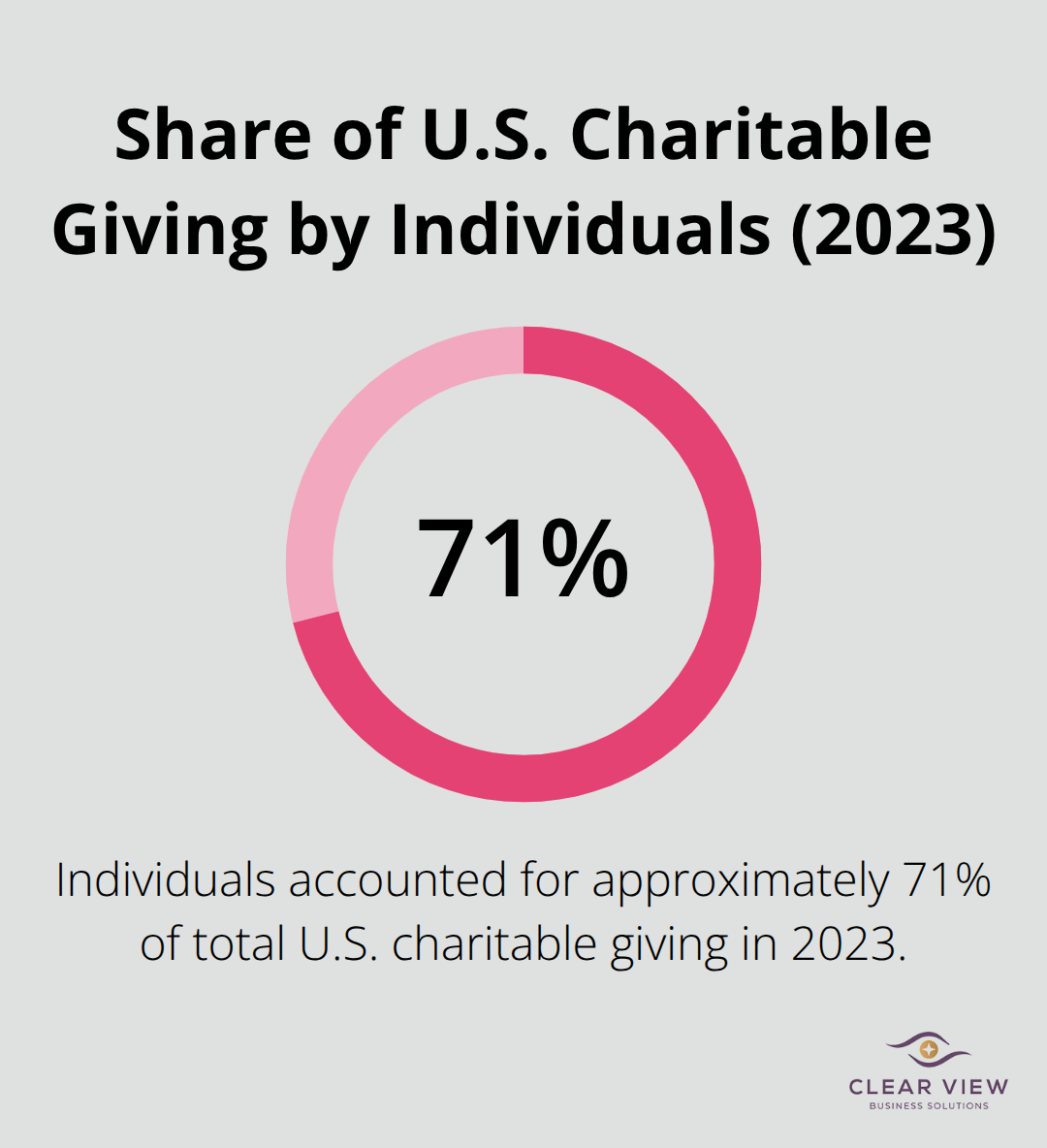
Tucson nonprofits often miss significant revenue opportunities because they don’t structure giving programs strategically. Most organizations treat donations as a passive income stream rather than designing giving structures that benefit both the donor and the organization. The truth is that donors want tax advantages, and when you provide clear pathways to receive them, giving increases. According to the Giving USA 2024 report, charitable giving in the United States reached $664.95 billion in 2023, with individuals accounting for approximately 71 percent of that total. The donors driving this growth aren’t random-they’re strategic, they want documentation of their tax benefits, and they respond to organizations that make giving easy and rewarding.
Planned giving programs represent one of the most underutilized strategies in Tucson nonprofit fundraising. A planned gift allows donors to contribute appreciated assets-stocks, real estate, or mutual funds-during their lifetime or through their estate, which generates an immediate charitable deduction while the asset appreciates tax-free within the fund. For donors in higher tax brackets, this structure is dramatically more efficient than cash donations.
The critical step is ensuring your accounting system tracks these contributions separately, documents the asset value at donation, and produces the required acknowledgment letters that satisfy IRS substantiation rules for gifts over $250. Many Tucson nonprofits lose major gifts because they lack the administrative infrastructure to accept planned gifts confidently. If you’re serious about expanding revenue, implement a planned giving policy now-before a donor approaches you and you’re forced to turn away a six-figure contribution.
Donor-Advised Funds function similarly to planned gifts but with more flexibility: the donor receives an immediate tax deduction for the full contribution amount, recommends grants to charities over time, and maintains advisory influence over the distribution. The National Philanthropic Trust reported that donor-advised funds held approximately $183 billion in assets as of 2023, representing a 24 percent increase from 2021. For your nonprofit, this means wealthy donors have more incentive to contribute larger amounts upfront if you can accept and process these gifts properly.
Coordinate with a tax professional who understands both nonprofit requirements and donor tax situations to structure these programs correctly and position your organization as a sophisticated recipient of major gifts. This foundation of strategic giving structures directly impacts how you approach cost reduction and operational efficiency-the next area where Tucson nonprofits typically leave money on the table.
Most Tucson nonprofits waste thousands annually on expenses they could deduct or structure differently. The problem isn’t that deductions don’t exist-it’s that organizations treat tax planning as something to handle after the year ends rather than building it into operations from day one. Travel taken for nonprofit business, meals provided during board meetings, equipment purchases, office supplies, and even home office arrangements for staff working remotely can all generate deductions if you separate personal and business components and document them properly. The IRS won’t grant deductions for expenses you can’t substantiate with receipts and detailed logs, which means your accounting system must capture these expenses in real time, not reconstruct them months later.
Nonprofits that implement nonprofit-specific technology to track grant spending, program expenses, and operational costs reduce errors and penalties while uncovering deductions they otherwise miss. Many organizations also overlook that unrelated business income-revenue from activities outside your tax-exempt mission-is taxable, which means you need clear accounting separation between program revenue and unrelated income. This distinction determines whether you file Form 990-T and pay federal tax on that income, so misclassifying revenue can trigger unexpected tax bills. The home office deduction may be available for staff who work from home, but eligibility must be evaluated under specific IRS rules about dedicated space and regular business use.
Payroll management deserves equal attention: you must prepare payroll weekly, biweekly, or monthly and make payroll tax deposits that comply with IRS deadlines to avoid penalties. A qualified provider can prepare and file Form 990 and Form 990-T on your behalf each year, which removes the administrative burden and ensures compliance.
The Functional Expense Statement on Form 990 forces you to allocate all spending into three categories: program services, fundraising, or operations. Nonprofits that appear to spend too much on overhead face donor skepticism and grant rejection, even when the actual percentages are reasonable, because most donors and foundations use arbitrary overhead ratios to judge nonprofit quality. This means you should review your organizational structure and service delivery model now to identify whether consolidating roles, outsourcing specific functions, or restructuring programs could legitimately shift expenses from overhead to program services.
For example, if your executive director spends 60 percent of time managing programs and 40 percent on administration, you allocate their salary proportionally-but many organizations fail to track this split and default to charging the full salary to overhead. Implementing internal controls strengthens financial oversight and protects nonprofit assets while producing the clear documentation that auditors and funders require.
Quarterly and annual financial statements allow you to monitor program expenses, overhead, and overall financial health, giving you real-time visibility into cost trends rather than discovering problems at year-end. Multi-year budget planning directly addresses sustainability: most Tucson nonprofits budget year to year without understanding whether their funding model can support operations beyond twelve months. If you rely heavily on a single grant or donor, your organization faces collapse when that funding ends, which is why proactive tax planning should include diversifying revenue sources and building reserves that cover at least three months of operations.
Nonprofit tax planning in Tucson requires more than filing forms on time-it demands a strategic approach that integrates compliance, donor relationships, and operational efficiency from the ground up. Organizations that treat tax planning as an ongoing process rather than an annual scramble build systems that capture deductions in real time, structure giving programs strategically, and align expenses with IRS categories before the year ends. Each strategy covered in this guide directly impacts your bottom line and your organization’s long-term sustainability.
Working with a tax professional who understands nonprofit-specific requirements transforms how you approach financial management. Rather than reacting to tax obligations, you gain the ability to plan proactively, anticipate compliance issues before they become problems, and identify savings opportunities that generic tax services miss. A qualified advisor helps you structure operations to minimize tax liability on unrelated business income, implement internal controls that protect assets, and prepare financial statements that satisfy both funders and the IRS.
We at Clear View Business Solutions specialize in helping Tucson nonprofits achieve financial stability through comprehensive tax planning, accounting, and IRS representation. Whether you’re establishing 501(c)(3) status, restructuring your accounting system, or implementing donor-advised fund programs, our team provides the personalized guidance that transforms compliance into a competitive advantage. Contact us today to schedule a free consultation and discover how nonprofit tax planning in Tucson can strengthen your organization’s financial foundation.




At Clear View Business Solutions, we know you want your business to prosper without having to worry about whether you are paying more in taxes than you should or whether your business is set up correctly. The problem is it's hard to find a trusted advisor who can translate financial jargon to layman's terms and who can actually help you plan for better results.
We believe it doesn't have to be this way! No business owner should settle for working with a CPA firm that falls short of understanding what you want to achieve and how to help you get there.
Northwest Location:
7530 N. La Cholla Blvd., Tucson, AZ 85741
Central Location:
2933 N Campbell Avenue, Tucson, AZ 85719
© 2026 Clear View Business Solutions. All Rights Reserved.
At Clear View Business Solutions, we know you want your business to prosper without having to worry about whether you are paying more in taxes than you should or whether your business is set up correctly. The problem is it's hard to find a trusted advisor who can translate financial jargon to layman's terms and who can actually help you plan for better results.
We believe it doesn't have to be this way! No business owner should settle for working with a CPA firm that falls short of understanding what you want to achieve and how to help you get there. With over 20 years of experience serving hundreds of business owners like you, our team of experts combines financial expertise and proactive communication with our drive to help each client achieve results and have fun along the way.
Here's how we do it:
Discover: We start with a consultation to understand your specific goals, what's holding you back, and what success looks like for you.
Strategize & Optimize: Together, we design a customized strategy that empowers you to progress toward your goals, and we optimize our communication as partners.
Thrive: You enjoy a clear view of your business and your financial prosperity.
Schedule a consultation today, and take the first step toward being able to focus on your core business again without wondering if your numbers are right- or what they mean to your business.
In the meantime, download, "The Business Owner's Essential Guide to Tax Deductions" and make sure you aren't leaving money on the table.